
Anúncios
In today’s fast-paced world, where stress and anxiety have become constant companions, meditation emerges as a powerful tool to restore balance and inner peace.


The practice of meditation has transcended cultural boundaries and ancient traditions to become a scientifically validated method for managing the overwhelming demands of modern life. What was once considered an esoteric practice reserved for monks and spiritual seekers is now recognized by healthcare professionals, psychologists, and neuroscientists as an effective intervention for stress reduction and overall wellbeing.
Anúncios
As we navigate through endless emails, tight deadlines, social obligations, and the constant bombardment of information from our devices, finding moments of stillness becomes not just beneficial, but essential. Meditation offers us a refuge—a way to press pause on the chaos and reconnect with our inner selves. 🧘♀️
Understanding Meditation: More Than Just Sitting Still

Meditation is often misunderstood as simply sitting cross-legged and emptying your mind of all thoughts. In reality, it’s a diverse practice with numerous techniques and approaches, each designed to cultivate awareness, focus, and emotional regulation.
Anúncios
At its core, meditation is about training your attention. Whether you’re focusing on your breath, repeating a mantra, or observing your thoughts without judgment, you’re developing the mental muscle that allows you to be present rather than lost in worries about the future or regrets about the past.
This ancient practice, dating back thousands of years across various cultures and religions, has evolved into secular forms that are accessible to anyone, regardless of their spiritual beliefs. From mindfulness meditation to transcendental meditation, from guided visualizations to body scan techniques, there’s a style suited to every personality and lifestyle.
The Science Behind the Stillness 🧠
Modern neuroscience has provided compelling evidence for what practitioners have known intuitively for millennia: meditation physically changes the brain. Studies using MRI scans have shown that regular meditation increases gray matter density in areas associated with learning, memory, emotional regulation, and perspective-taking.
Research from Harvard University discovered that just eight weeks of mindfulness meditation can measurably change brain regions linked to memory, sense of self, empathy, and stress. The amygdala, our brain’s alarm system responsible for anxiety and stress responses, actually shrinks with consistent practice.
Furthermore, meditation has been shown to reduce cortisol levels—the hormone directly associated with stress. When cortisol remains elevated over long periods, it contributes to numerous health problems, including high blood pressure, weakened immune function, and increased risk of depression.
How Daily Stress Impacts Your Health and Happiness
Before diving deeper into meditation’s benefits, it’s essential to understand what we’re fighting against. Daily stress, when left unmanaged, doesn’t just make us feel uncomfortable—it fundamentally undermines our physical and mental health.
Chronic stress keeps our nervous system in a perpetual state of “fight or flight,” which was designed by evolution for short-term survival threats, not for handling traffic jams, work pressures, or relationship conflicts. This continuous activation leads to inflammation, digestive issues, insomnia, headaches, and cardiovascular problems.
Mentally, unmanaged stress erodes our capacity for joy, creativity, and connection. It narrows our perspective, making small problems seem insurmountable and robbing us of the ability to appreciate the positive aspects of our lives. Many people living with chronic stress describe feeling like they’re constantly running on a treadmill that never stops.
The Vicious Cycle of Stress and Anxiety 😰
Stress and anxiety often feed each other in a destructive loop. Stress about one aspect of life spills over into others, creating a generalized state of tension. You might lose sleep worrying about work, which makes you more irritable with family, which causes relationship stress, which further disrupts your sleep—and the cycle continues.
This is where meditation becomes transformative. It doesn’t eliminate stressors from your life, but it fundamentally changes your relationship with them. Instead of being swept away by stress, you develop the capacity to observe it, understand it, and respond rather than react.
Profound Benefits of Regular Meditation Practice
The advantages of incorporating meditation into your daily routine extend far beyond simple stress relief. While that alone would be worthwhile, the practice offers a comprehensive transformation of how you experience life.
Enhanced Emotional Regulation and Resilience ✨
One of the most significant benefits of meditation is developing emotional intelligence and resilience. Through regular practice, you become less reactive to difficult emotions and more capable of navigating them skillfully.
Rather than being hijacked by anger, overwhelmed by sadness, or paralyzed by fear, you learn to recognize these emotions as temporary states that don’t define you. This doesn’t mean suppressing feelings—quite the opposite. It means experiencing them fully without being controlled by them.
This emotional regulation translates into improved relationships, better decision-making, and greater overall life satisfaction. People who meditate regularly report feeling more balanced and less likely to be thrown off course by life’s inevitable challenges.
Improved Focus and Cognitive Performance 🎯
In an age of constant distraction, the ability to focus has become a superpower. Meditation is essentially attention training, and the results are measurable. Studies have shown that meditation improves sustained attention, working memory, and the ability to filter out irrelevant information.
Even short meditation sessions have been shown to improve performance on cognitive tasks. One study found that just four days of meditation training enhanced participants’ ability to sustain attention and reduced mind-wandering.
Better Physical Health and Immune Function 💪
The mind-body connection is real, and meditation is one of the most powerful tools for harnessing it. Regular meditation practice has been associated with:
- Lower blood pressure and reduced risk of heart disease
- Improved immune function and faster recovery from illness
- Reduced chronic pain and better pain management
- Enhanced sleep quality and treatment of insomnia
- Decreased inflammation at the cellular level
- Slower cellular aging and longer telomeres
These aren’t minor benefits—they represent fundamental improvements in health that can add years to your life and life to your years. The relaxation response triggered by meditation counteracts the harmful effects of chronic stress on every system in your body.
Deeper Self-Awareness and Personal Growth 🌱
Beyond the practical benefits, meditation offers something more profound: a journey of self-discovery. As you sit with yourself day after day, you begin to see patterns in your thoughts, recognize automatic reactions, and understand the conditioning that drives your behavior.
This awareness is the first step toward genuine change. You can’t transform what you don’t recognize. Through meditation, you develop the observer perspective—the ability to witness your experience rather than being completely identified with it.
Many practitioners describe meditation as returning home to themselves. In a world that constantly pulls our attention outward, meditation creates space for the inner life to flourish. This leads to greater authenticity, clearer values, and a stronger sense of purpose.
Practical Ways to Incorporate Meditation Into Your Daily Routine
Understanding the benefits of meditation is one thing; actually establishing a consistent practice is another. The good news is that you don’t need to meditate for hours or retreat to a monastery to experience profound benefits.
Starting Small and Building Consistency 🌅
The most common mistake beginners make is being overly ambitious. Starting with hour-long sessions sets you up for failure. Instead, begin with just five minutes a day. That’s all. Five minutes is manageable for anyone, and it removes the intimidation factor.
Consistency matters far more than duration. Five minutes every single day will transform your life more than sporadic hour-long sessions. Once the habit is established, you can gradually increase the time as you feel called to do so.
Choose a specific time and place for your practice. Many people find that morning meditation sets a positive tone for the entire day, while others prefer evening sessions to decompress from daily stress. The best time is the one you’ll actually stick with.
Simple Techniques for Beginners 🎐
If you’re new to meditation, try these accessible techniques:
- Breath awareness: Simply focus on the natural rhythm of your breathing. When your mind wanders (and it will), gently return attention to the breath without judgment.
- Body scan: Systematically bring awareness to different parts of your body, noticing sensations without trying to change them.
- Guided meditation: Use apps or recordings that provide verbal guidance throughout the session, which can be especially helpful for beginners.
- Loving-kindness meditation: Cultivate feelings of compassion by directing well-wishes toward yourself and others.
- Walking meditation: Bring mindful awareness to the physical sensations of walking, perfect for those who find sitting still challenging.
Remember that there’s no “perfect” meditation. If you’re showing up and making the effort, you’re doing it right. The wandering mind isn’t a failure—noticing that your mind has wandered and bringing it back is actually the exercise that strengthens your attention.
Overcoming Common Obstacles and Misconceptions
Many people abandon meditation before experiencing its benefits because of common misconceptions or early challenges. Understanding these obstacles can help you navigate them successfully.
Dealing with the Busy Mind 🌪️
Perhaps the most common complaint is: “I can’t meditate because my mind won’t stop thinking.” This reveals a fundamental misunderstanding. The goal isn’t to stop thinking—that’s neither possible nor desirable. Thoughts are what minds do.
Meditation is about changing your relationship with thoughts. Instead of being carried away by every mental narrative, you learn to observe thoughts as events in awareness, like clouds passing through the sky. They come and go, and you remain the sky—spacious and unchanging.
When you notice you’ve been lost in thought, that moment of noticing is actually a moment of mindfulness. Celebrate it rather than criticizing yourself. Each time you return your attention, you’re strengthening your mental fitness.
Finding Time in a Busy Schedule ⏰
The irony is that the busier and more stressed you are, the more you need meditation—but also the harder it seems to find time for it. The solution is reframing meditation not as another item on your to-do list, but as the foundation that makes everything else more manageable.
Consider this: the time you invest in meditation returns to you multiplied through increased focus, efficiency, and emotional balance. You’re not losing time; you’re gaining capacity.
If finding a dedicated block of time is truly challenging, try integrating mindfulness into existing activities. Mindful eating, mindful commuting, or even mindful dishwashing can serve as meditation practice. The key is bringing full attention to the present moment, whatever you’re doing.
Creating Your Sustainable Meditation Journey
Building a meditation practice is a marathon, not a sprint. The goal is to develop a sustainable habit that becomes as natural as brushing your teeth—something you do simply because it’s part of how you take care of yourself.
Tracking Progress Without Attachment 📊
While it can be motivating to track your meditation sessions—many apps offer streak counters and statistics—be careful not to become obsessively attached to these metrics. Missing a day doesn’t erase your progress, and meditating for 20 minutes isn’t necessarily “better” than 10 minutes.
The real progress happens subtly, over time. You might notice you’re sleeping better, reacting less intensely to stress, or feeling more connected to the people around you. These life improvements are the true measures of success, not the numbers in an app.
Building a Supportive Environment 🏡
Creating a dedicated meditation space, even if it’s just a corner of a room with a cushion, can strengthen your practice. This doesn’t need to be elaborate—simplicity is actually ideal. A comfortable place to sit, perhaps a candle or plant, and freedom from interruptions are all you need.
Consider joining a meditation group or online community. Practicing with others, even virtually, can provide motivation, accountability, and the opportunity to learn from more experienced practitioners. Many people find that group meditation deepens their practice in ways that solo sessions don’t.
Meditation as a Gateway to Holistic Wellbeing
While we’ve focused primarily on stress relief, meditation often catalyzes broader lifestyle changes. As you become more mindful and present, you naturally begin making choices that support your wellbeing in other areas.
Many meditators find themselves drawn to healthier eating, not from willpower or restriction, but from increased awareness of how different foods make them feel. Physical activity becomes more enjoyable when approached mindfully. Relationships deepen when you bring full presence to your interactions.
This isn’t about perfection or radical transformation overnight. It’s about gentle, sustainable shifts that accumulate over time. Meditation creates the inner spaciousness from which wise choices emerge naturally, rather than feeling like another struggle or obligation.
The Ripple Effect Beyond Yourself 🌊
One of the beautiful aspects of meditation is that its benefits extend beyond the individual practitioner. When you’re more centered, calm, and present, everyone around you benefits. Your increased patience, empathy, and emotional stability positively affect your family, colleagues, and community.
In this way, choosing to meditate is both a profound act of self-care and a contribution to collective wellbeing. In a world desperately in need of more peace, compassion, and understanding, your personal practice becomes a small but significant force for positive change.
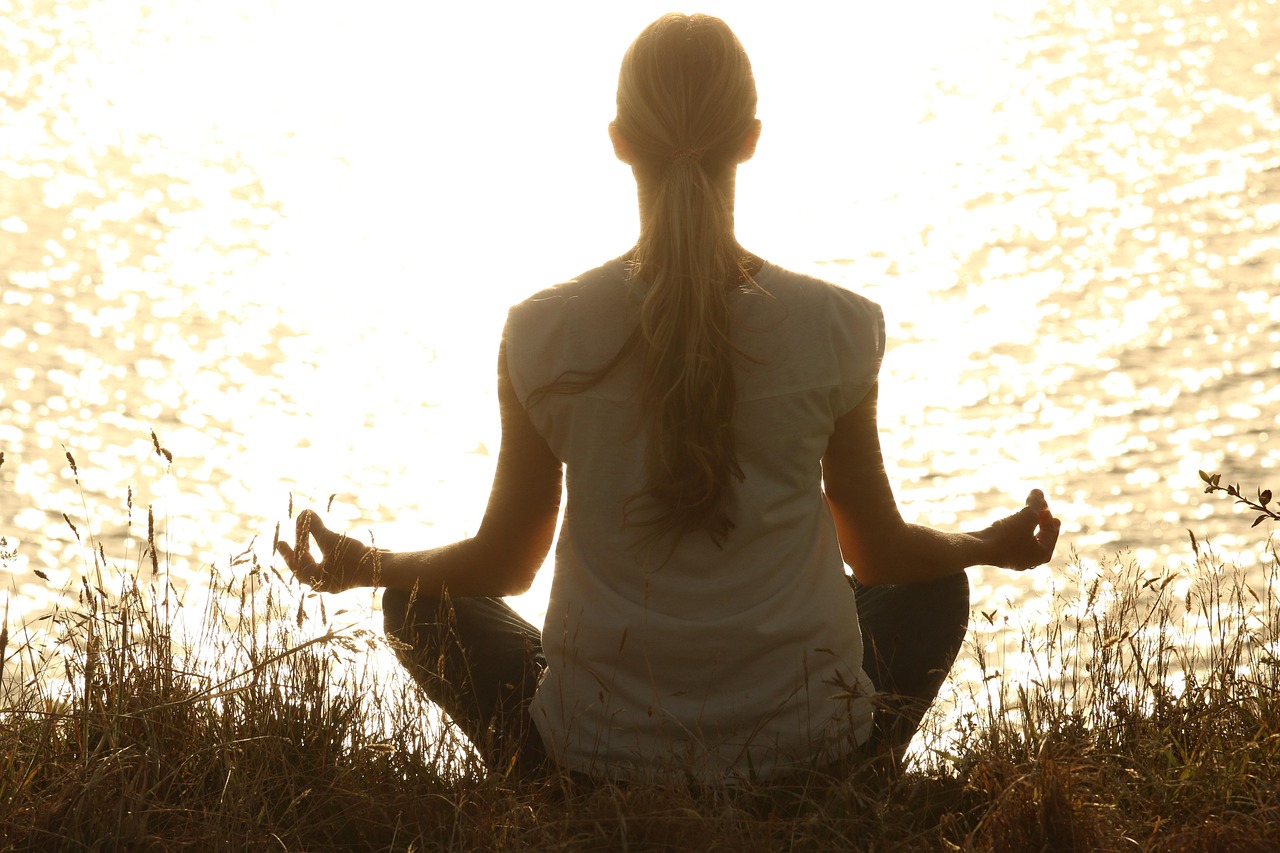
Embracing the Present Moment as a Path Forward
The ultimate gift of meditation is the recognition that the present moment is the only moment we truly have. The past is memory, the future is imagination, but right now is real, alive, and full of possibility.
So much of our stress comes from mentally living anywhere except where we actually are—worrying about what might happen, ruminating about what has happened, comparing ourselves to others, or chasing a future moment when we imagine we’ll finally be happy.
Meditation gently but persistently returns us to now. And in the now, when we’re not adding layers of mental commentary and projection, things are often more workable than they seemed. Problems that appeared overwhelming become simply the next thing to address. Emotions that seemed unbearable become sensations that naturally shift and change.
This doesn’t mean meditation makes life perfect or eliminates all challenges. It means you develop the inner resources to meet whatever arises with greater wisdom, balance, and grace. And in a complex, demanding world, that capability is truly invaluable.
Starting a meditation practice might be one of the most important decisions you make for your health, happiness, and quality of life. The research is clear, the benefits are substantial, and the practice is accessible to anyone willing to dedicate a few minutes each day.
Your mind is your most valuable asset. Meditation is how you learn to use it skillfully rather than being used by it. In the quiet space of meditation, you discover that beneath the surface turbulence of thoughts and emotions lies a deep wellspring of peace that has always been there, waiting for you to come home. 🕊️
