
Anúncios
Throughout history, disasters have reshaped societies, tested human limits, and ultimately revealed our greatest strengths. These challenging moments transform ordinary people into extraordinary heroes.
🌪️ When the World Breaks: Understanding the Catalyst of Change
Disasters strike without warning, shattering the comfortable routines we build around ourselves. Whether natural calamities like earthquakes and hurricanes, or human-made crises such as wars and pandemics, these events force us to confront our vulnerability. Yet within this confrontation lies an unexpected gift: the opportunity to discover who we truly are when everything familiar disappears.
Anúncios
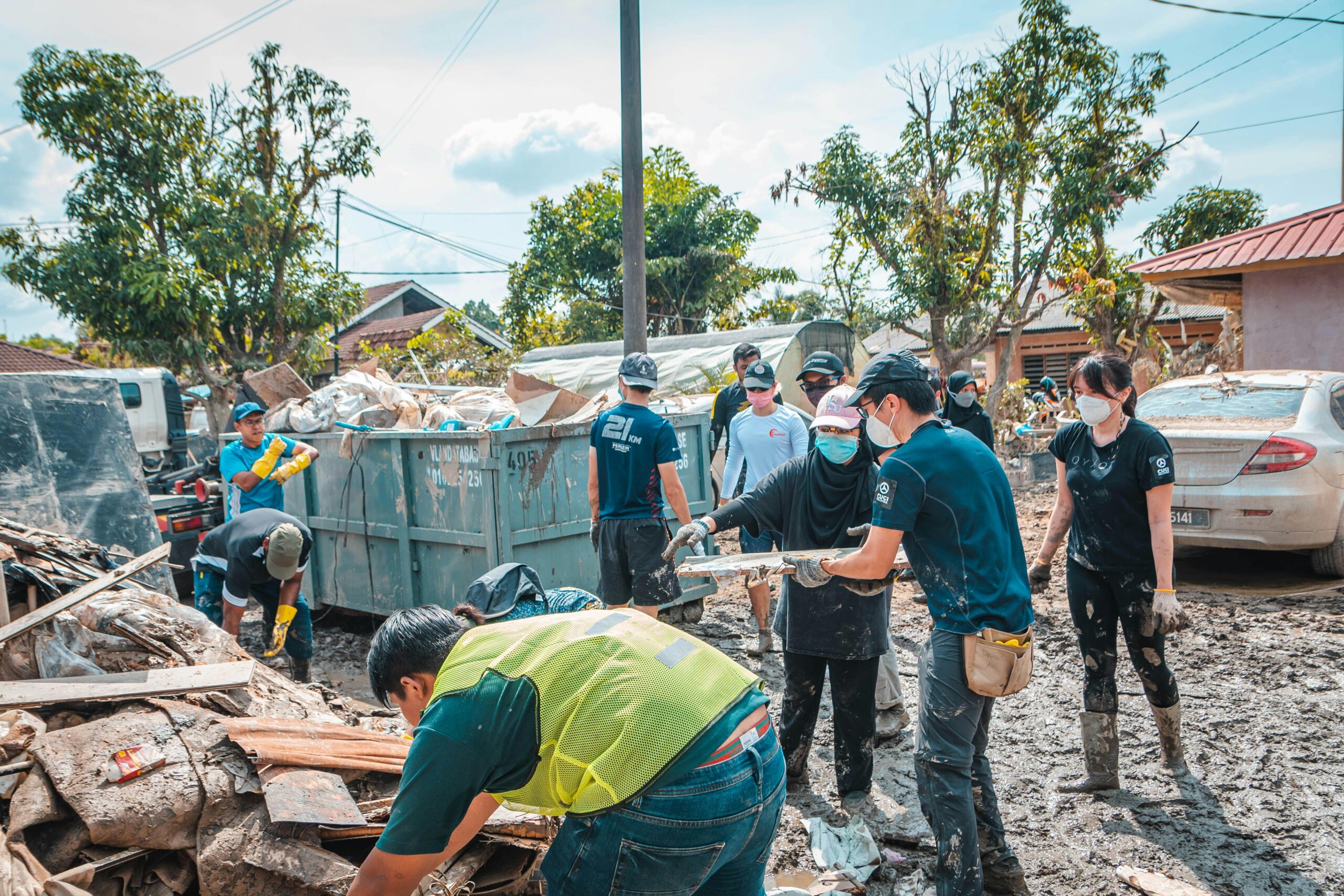
The chaos of disaster creates a unique laboratory for human behavior. When societal structures collapse, we witness both the darkest and brightest aspects of humanity. While some stories highlight looting and panic, countless more reveal neighbors helping neighbors, strangers becoming family, and communities rallying together with unprecedented unity. This duality teaches us that crisis doesn’t create character—it reveals it.
Research from disaster psychology shows that approximately 75% of people respond to emergencies with prosocial behavior, helping others before considering their own needs. This statistic challenges the common narrative of panic and selfishness during crises. Instead, it suggests that disaster awakens something fundamentally human within us: an instinct to connect, protect, and preserve our collective survival.
Anúncios
The Alchemy of Adversity: Transforming Pain into Wisdom
Resilience isn’t something we possess innately; it’s forged in the furnace of hardship. Every disaster survivor carries lessons that cannot be taught in classrooms or learned from books. These lessons emerge from lived experience, from the moment when everything falls apart and we must decide whether to crumble or rebuild.
Consider the survivors of the 2011 Japanese tsunami. Communities that lost everything didn’t simply reconstruct buildings—they reimagined their relationship with the ocean, implementing early warning systems and evacuation protocols that now serve as global models. The disaster became their teacher, and their willingness to learn transformed tragedy into a legacy of preparedness that saves lives today.
Five Core Lessons Disasters Teach Us
- Impermanence is universal: Nothing material is guaranteed, teaching us to value experiences and relationships over possessions
- Community matters more than individualism: Our interconnectedness becomes visible when we need each other most
- Adaptability ensures survival: Rigid thinking breaks under pressure; flexibility allows us to navigate uncertainty
- Present-moment awareness is essential: Disasters eliminate the luxury of living in past regrets or future anxieties
- Human capacity exceeds our expectations: We discover reserves of strength we never knew existed
💪 Building Resilience: The Gift That Keeps on Giving
Resilience represents the human spirit’s most remarkable quality: the ability to absorb tremendous shock and bounce back stronger. Unlike simple recovery, resilience involves transformation. The person who emerges from disaster isn’t the same person who entered it—they’re evolved, carrying new wisdom and capabilities.
Psychological research identifies several factors that predict resilience in disaster contexts. Strong social connections rank consistently at the top. People embedded in supportive networks recover faster and more completely than isolated individuals. This finding underscores an essential truth: we heal together, not alone.
Faith and meaning-making also play crucial roles. Those who can construct narrative meaning from their suffering—finding purpose in pain—demonstrate significantly better long-term outcomes. This doesn’t mean disasters happen “for a reason,” but rather that humans possess an extraordinary ability to create reason from what happens to us.
The Neuroscience of Bouncing Back
Our brains are literally rewired by traumatic experiences. The amygdala, our fear center, becomes more sensitive after disaster exposure. However, with proper support and processing, the prefrontal cortex—our reasoning center—can develop enhanced regulatory capabilities. This neuroplasticity means that surviving disaster can actually strengthen our emotional regulation systems.
Studies of disaster survivors show increased gray matter in brain regions associated with stress management and emotional processing. The brain adapts to challenge by building new neural pathways, essentially creating a more robust stress-response system. This biological reality gives scientific credence to Nietzsche’s famous observation: “What doesn’t kill you makes you stronger.”
🤝 Compassion Emerges from Shared Suffering
Perhaps no quality blooms more beautifully in disaster’s aftermath than compassion. When we witness suffering up close, when we see our own fear and vulnerability reflected in others’ eyes, artificial barriers dissolve. Race, class, political affiliation—these divisions seem absurdly small when survival is at stake.
The concept of “post-traumatic growth” describes positive psychological changes resulting from struggle with challenging circumstances. Studies indicate that 30-70% of trauma survivors report at least some positive changes, with increased compassion ranking among the most common. Having walked through darkness themselves, survivors develop profound empathy for others facing similar journeys.
This compassion extends beyond disaster survivors to create ripples throughout society. The 9/11 terrorist attacks, despite their horror, sparked unprecedented charitable giving and volunteerism across America. The 2004 Indian Ocean tsunami generated the largest humanitarian response in history, with billions donated from every corner of the globe. Disaster reminds us of our shared humanity, breaking down the walls we construct in comfortable times.
Empathy in Action: Stories from the Ground
During Hurricane Katrina, the “Cajun Navy”—a grassroots network of boat owners—spontaneously organized to rescue stranded residents. These volunteers risked their own safety, navigating dangerous floodwaters, because they simply couldn’t stand by while others suffered. Their actions exemplified compassion translated into courage.
In the COVID-19 pandemic, healthcare workers worldwide demonstrated extraordinary compassion despite exhaustion, trauma, and personal risk. Their dedication revealed that compassion isn’t just feeling—it’s doing, even when doing costs us dearly. These modern-day heroes teach us that compassion requires not just open hearts but willing hands.
🔥 The Indomitable Human Spirit: Our Greatest Resource
If disasters teach us anything, it’s that the human spirit possesses almost limitless capacity for perseverance. Viktor Frankl, Holocaust survivor and psychiatrist, wrote that humans can endure almost any suffering if they can find meaning within it. His observations, forged in history’s darkest chapter, illuminate a profound truth about our species.
The human spirit manifests in countless ways during crisis. It’s the mother who finds superhuman strength to lift debris off her child. It’s the elderly man who shares his last bottle of water with a stranger. It’s the community that rebuilds not just structures but hope itself, brick by brick, day by day.
This spirit isn’t blind optimism or denial of reality. Rather, it’s a clear-eyed determination to move forward despite knowing the full weight of what’s been lost. It acknowledges pain while refusing to be defined by it. This paradox—holding both grief and hope simultaneously—represents spiritual maturity that disaster uniquely cultivates.
📚 Collective Memory: How Societies Remember and Learn
Communities that survive disasters carry collective memories that shape identity for generations. These shared narratives become part of cultural DNA, informing how future challenges are approached. The Great Depression influenced American economic policy for decades. World War II’s devastation motivated the European Union’s creation. The 1918 flu pandemic informed public health infrastructure worldwide.
Collective memory serves protective functions, embedding lessons into cultural practice. Earthquake-prone Japan conducts regular disaster drills involving entire communities. Dutch engineering expertise in flood management stems from centuries of fighting the sea. These aren’t just technical skills—they’re cultural knowledge passed through generations, each disaster adding layers to collective wisdom.
Creating Meaningful Memorials
How we commemorate disasters matters deeply. Effective memorials don’t just honor victims; they educate future generations and inspire resilience. The 9/11 Memorial and Museum balances grief with hope, helping visitors process complex emotions while learning historical context. Such spaces become containers for collective healing, places where individual trauma connects to shared experience.
| Disaster Event | Year | Primary Lesson | Lasting Impact |
|---|---|---|---|
| San Francisco Earthquake | 1906 | Building code importance | Seismic-resistant architecture standards |
| Titanic Sinking | 1912 | Maritime safety protocols | International ice patrol, lifeboat requirements |
| Chernobyl Disaster | 1986 | Nuclear safety transparency | Enhanced reactor designs, emergency procedures |
| Hurricane Katrina | 2005 | Infrastructure vulnerability | Improved levee systems, evacuation planning |
🌱 Personal Transformation Through Crisis
On an individual level, disaster serves as an uninvited teacher that nevertheless provides invaluable education. Survivors often describe their lives in terms of “before” and “after,” recognizing that the experience fundamentally altered their priorities, values, and perspectives.
Many report increased appreciation for ordinary moments—sunrise, laughter, the comfort of home. Material possessions lose significance while relationships gain it. Time itself feels more precious, leading to reduced tolerance for superficiality and increased desire for authentic connection. These shifts represent a recalibration of what truly matters.
Some individuals discover vocations through disaster experience. They become emergency responders, trauma counselors, disaster preparedness advocates, or humanitarian workers. Their suffering finds purpose in preventing or alleviating others’ pain. This transformation of personal trauma into public service represents resilience at its finest.
⚡ Preparing for the Inevitable: Wisdom Applied
One crucial lesson disasters teach is that preparation isn’t pessimism—it’s love. We prepare for emergencies not because we expect them but because we care about protecting what matters most. Disaster preparation represents applied wisdom, taking lessons from past events and translating them into present action.
Effective preparation happens at multiple levels: individual, family, community, and societal. Each level requires different strategies but shares a common foundation: acknowledging vulnerability without succumbing to fear. This balanced approach empowers rather than paralyzes.
Building Your Resilience Foundation
- Cultivate strong relationships: Social capital proves more valuable than financial capital during crisis
- Develop practical skills: First aid, basic repairs, and emergency planning increase self-sufficiency
- Maintain physical and mental health: Resilience requires a strong foundation before crisis strikes
- Practice adaptability: Regularly challenge yourself with new situations to build cognitive flexibility
- Create meaning frameworks: Develop philosophical or spiritual perspectives that can withstand existential challenge
🌍 Global Perspectives: Learning Across Borders
In our interconnected world, disasters increasingly transcend borders. Climate change creates shared vulnerabilities requiring collective solutions. Pandemics demonstrate that global health depends on every nation’s capacity to respond. Economic crises ripple worldwide within hours. These realities demand that we learn not just from our own disasters but from humanity’s collective experience.
International disaster response mechanisms have evolved significantly, with organizations like UNICEF, Red Cross, and Doctors Without Borders mobilizing rapidly when crisis strikes. This global compassion infrastructure represents humanity’s recognition that suffering anywhere concerns us everywhere.
Different cultures approach disaster with varying philosophical frameworks. Japanese “gaman” (endurance with dignity) offers one model. Italian “sprezzatura” (graceful resilience) suggests another. Indigenous wisdom traditions often emphasize cyclical understanding—recognizing that destruction and creation are inseparable partners in nature’s dance. These diverse perspectives enrich global disaster wisdom.
🎯 Moving Forward: Integrating Lessons Learned
The ultimate measure of wisdom isn’t knowledge possessed but lessons applied. Disaster teaches us daily that tomorrow isn’t guaranteed, relationships matter most, and human spirit overcomes incredible odds. The question becomes: how do we live these truths during ordinary times, not just emergencies?
Integration requires intentionality. It means choosing community over isolation, preparation over complacency, compassion over indifference. It means recognizing that every person we meet carries invisible struggles, worthy of our gentleness. It means building lives of meaning that can withstand inevitable storms.
Perhaps most importantly, disaster wisdom teaches us to hold paradox: to acknowledge life’s fragility while celebrating its beauty, to prepare for worst-case scenarios while hoping for the best, to grieve what’s lost while gratefully embracing what remains. This mature spirituality doesn’t emerge from books or lectures—only from walking through fire and discovering we’re stronger than we knew.
💫 The Phoenix Rising: Humanity’s Eternal Story
Throughout recorded history and across every culture, the phoenix myth recurs: destruction followed by rebirth, death giving way to new life. This isn’t wishful thinking but rather humanity’s observed pattern. We fall and rise, break and rebuild, suffer and transcend. Disasters accelerate this cycle, compressing lifetimes of growth into moments of intense pressure.
Every survivor carries within them proof that darkness doesn’t last forever, that dawn follows night, that the human capacity for renewal exceeds any catastrophe’s power to permanently destroy. They walk among us as living reminders that resilience isn’t exceptional—it’s our inheritance as humans.
The wisdom gained from disaster becomes legacy when shared, when survivors transform personal pain into collective protection. Their stories warn, inspire, and guide us. Their resilience demonstrates what’s possible when everything seems impossible. Their compassion creates ripples that extend far beyond their immediate circles, touching lives they’ll never meet.
As we face an uncertain future marked by climate change, geopolitical instability, and technological disruption, the lessons disasters teach become increasingly vital. We cannot prevent all catastrophes, but we can prepare our spirits, strengthen our communities, and choose compassion over fear. In doing so, we honor those who’ve walked this path before us and light the way for those who’ll follow.
Ultimately, turning chaos into wisdom isn’t a one-time achievement but an ongoing practice. Each challenge offers fresh opportunities to deepen resilience, expand compassion, and discover reserves of strength we didn’t know existed. The disasters we face—individually and collectively—aren’t meaningless suffering but rather invitations to evolve, to become more fully human, to recognize our shared vulnerability as the foundation for genuine connection.
This is humanity’s greatest lesson from disaster: we are fragile and strong, vulnerable and resilient, broken and beautiful. Our power lies not in avoiding struggle but in how we rise from it, not in preventing all suffering but in what we do with the suffering we cannot avoid. In this transformation of chaos into wisdom, we discover not just survival strategies but the very essence of what makes us human—our ability to hope, heal, and help one another through the darkest nights toward brighter mornings.
