Anúncios
In a world racing toward digital transformation, the collision of generations isn’t a problem—it’s our greatest untapped resource for innovation and progress. 🌍
The workplace, communities, and families today are more generationally diverse than ever before. Baby Boomers, Generation X, Millennials, and Generation Z are simultaneously active, each bringing distinct perspectives shaped by their unique historical contexts, technological experiences, and value systems. Rather than viewing these differences as friction points, forward-thinking organizations and communities are discovering that intergenerational knowledge transfer represents a strategic advantage that can drive innovation, preserve institutional wisdom, and create more resilient systems for the future.
Anúncios
The concept of bridging generations goes far beyond simple mentorship programs or age diversity initiatives. It encompasses a holistic approach to capturing, sharing, and synthesizing knowledge across age groups in ways that honor traditional wisdom while embracing technological advancement. This symbiotic relationship creates a knowledge ecosystem where experience meets innovation, analog insights complement digital fluency, and collective intelligence surpasses what any single generation could achieve alone.
📚 The Hidden Crisis: When Generational Knowledge Walks Out the Door
Organizations worldwide face a silent crisis that rarely makes headlines but costs billions annually: the loss of critical knowledge when experienced workers retire. According to workforce studies, approximately 10,000 Baby Boomers retire daily in the United States alone, taking with them decades of institutional knowledge, problem-solving expertise, and relationship networks that cannot be easily replicated or replaced.
Anúncios
This knowledge exodus manifests in multiple ways. Manufacturing companies lose understanding of specialized processes that were never formally documented. Healthcare systems lose diagnostic intuition developed over thousands of patient interactions. Government agencies lose navigational knowledge of complex regulatory frameworks. The departure of experienced workers creates knowledge gaps that newer employees often don’t even know exist until critical situations arise.
Beyond formal workplace settings, communities lose cultural knowledge, traditional skills, and historical context when older generations pass without adequate knowledge preservation mechanisms. Languages disappear, craft techniques vanish, and communal wisdom accumulated over centuries dissolves in a single generation when intergenerational transmission breaks down.
💡 The Reverse Mentorship Revolution: Learning Flows Both Ways
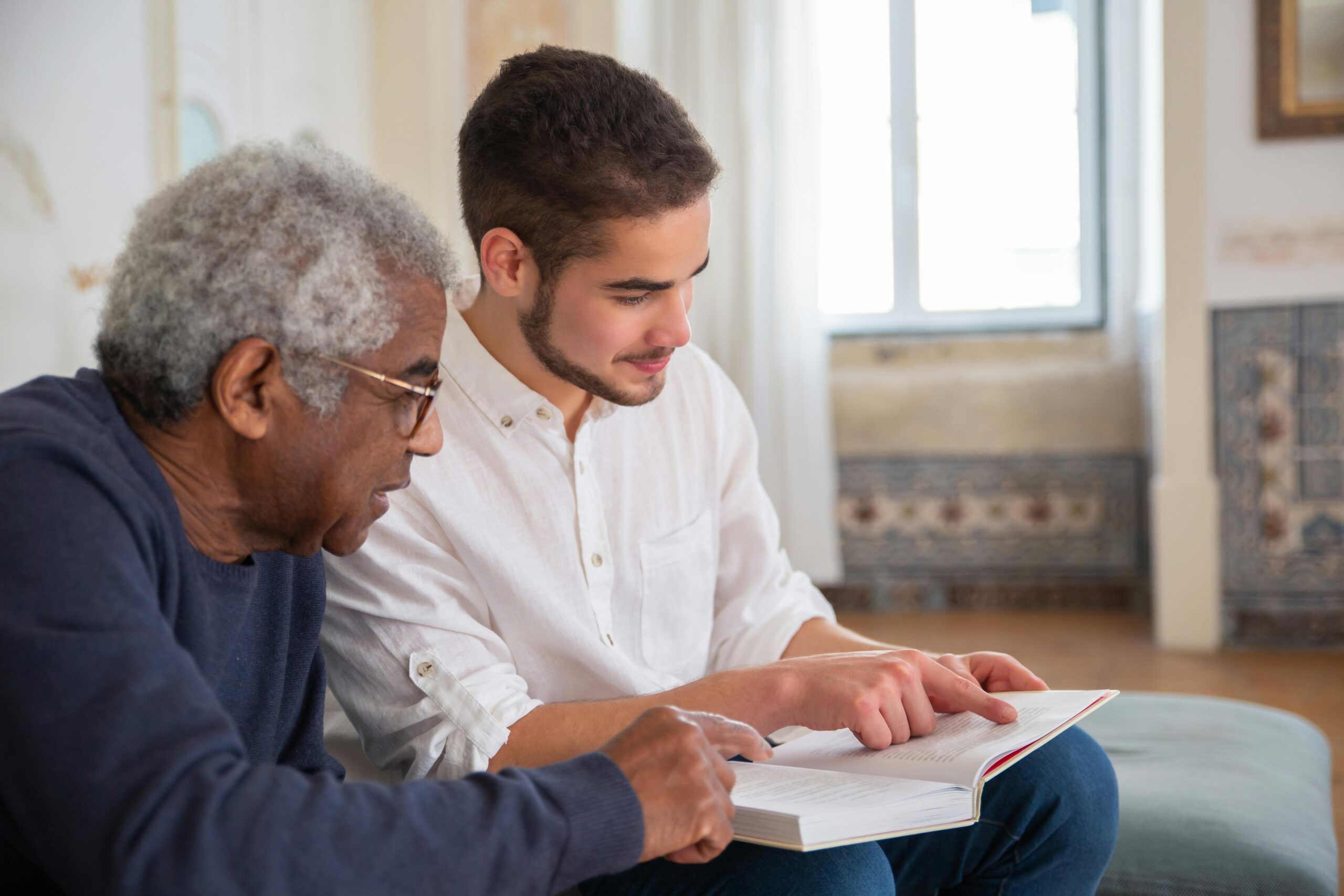
Progressive organizations have discovered that knowledge transfer isn’t unidirectional. While younger workers benefit enormously from the experience and contextual understanding of senior colleagues, older workers gain tremendous value from the digital fluency, contemporary perspectives, and innovative thinking of younger generations. This recognition has spawned the reverse mentorship movement, where traditional hierarchies of knowledge are deliberately inverted or equalized.
In reverse mentorship arrangements, junior employees mentor senior leaders on emerging technologies, social media strategies, contemporary cultural trends, and evolving customer expectations. A 25-year-old digital native might coach a 55-year-old executive on leveraging Instagram for brand building, while simultaneously learning strategic business planning from that same executive. This bidirectional knowledge flow creates mutual respect, breaks down age-based stereotypes, and accelerates organizational learning.
Companies like General Electric, Cisco, and Procter & Gamble have formalized reverse mentorship programs with measurable results. Executives gain contemporary technological skills and market insights, while junior employees develop confidence, expand their networks, and gain visibility with organizational leadership. The relationship benefits both parties while strengthening organizational knowledge infrastructure.
🔧 Practical Frameworks for Capturing Cross-Generational Wisdom
Effectively bridging generations requires intentional frameworks that facilitate knowledge capture, transfer, and integration. Organizations that excel at intergenerational knowledge management typically employ multiple complementary approaches:
- Structured knowledge harvesting: Systematic interviews and documentation processes that capture tacit knowledge before experienced employees transition out of roles
- Shadowing and apprenticeship programs: Extended observation periods where less experienced workers learn through immersive participation alongside experts
- Cross-generational project teams: Deliberate team composition that mixes ages and experience levels to facilitate organic knowledge exchange
- Storytelling and narrative preservation: Formal programs that record organizational history, decision-making context, and lessons learned through oral histories and case studies
- Communities of practice: Voluntary groups organized around shared interests where members of different generations exchange insights and solve problems collaboratively
Technology plays an increasingly important role in these frameworks. Video recording makes expert knowledge accessible beyond individual interactions. Collaborative platforms enable asynchronous knowledge sharing across time zones and schedules. Artificial intelligence can help organize and retrieve institutional knowledge, making decades of collective wisdom searchable and actionable.
🌐 Technology as the Great Generational Connector
Digital platforms have emerged as powerful bridges across generational divides, creating shared spaces where different age groups can collaborate, communicate, and co-create. Social media, despite its challenges, has connected grandparents with grandchildren across continents, enabling relationship maintenance that would have been impossible in previous eras. Video calling platforms transformed during the pandemic into lifelines that kept families connected and enabled older adults to maintain social connections.
In professional contexts, collaboration tools like Slack, Microsoft Teams, and project management platforms create equitable communication environments where contributions are valued based on merit rather than seniority. These tools can level hierarchical playing fields and give voice to quieter team members regardless of age. The asynchronous nature of many digital platforms also accommodates different communication preferences and working styles across generations.
Educational technology has democratized learning in ways that benefit all ages. Online courses enable 70-year-olds to learn programming alongside 20-year-olds. Tutorial videos allow people to acquire skills on-demand regardless of formal educational background. Knowledge that was once gatekept by institutions is now accessible to anyone with internet connectivity and curiosity.
🏢 Organizational Culture: The Foundation of Generational Bridge-Building
Technology and programs alone cannot bridge generational divides without supportive organizational culture. Companies that successfully harness intergenerational knowledge share several cultural characteristics that enable effective collaboration across age groups:
First, they cultivate psychological safety where all generations feel comfortable sharing ideas, asking questions, and admitting knowledge gaps without fear of judgment. Older workers can acknowledge technological limitations while younger employees can admit lack of industry experience without either diminishing their value to the organization.
Second, they actively challenge age-based stereotypes through education and modeling. Leadership demonstrates that innovation isn’t the exclusive domain of youth, nor is wisdom the exclusive province of age. They celebrate examples of older workers driving digital transformation and younger employees demonstrating strategic thinking that defies age expectations.
Third, they create formal structures that facilitate intergenerational interaction. Open office layouts, cross-functional teams, rotational assignments, and social events are deliberately designed to mix generations rather than allowing age-based clustering that creates isolated knowledge silos.
📊 Measuring the Impact: The Business Case for Generational Integration
Organizations that effectively bridge generations see measurable benefits across multiple dimensions. While intangible benefits like improved morale and innovation culture are valuable, concrete metrics demonstrate clear return on investment for intergenerational knowledge initiatives.
| Metric Category | Typical Improvements | Business Impact |
|---|---|---|
| Knowledge Retention | 40-60% reduction in critical knowledge loss during transitions | Faster onboarding, fewer operational disruptions |
| Innovation Rates | 25-35% increase in implemented innovations | Competitive advantage, market responsiveness |
| Employee Engagement | 15-20% improvement in engagement scores | Reduced turnover, higher productivity |
| Problem-Solving Speed | 30-40% faster resolution of complex issues | Operational efficiency, customer satisfaction |
Beyond these organizational metrics, communities that successfully integrate generational knowledge see reduced social isolation among older adults, improved civic engagement, preservation of cultural heritage, and stronger social cohesion. These benefits extend far beyond economic value into quality of life and community resilience.
🎓 Education Systems: Redesigning Learning for All Ages
Traditional education systems organized around age cohorts are gradually giving way to more flexible, lifelong learning models that naturally facilitate intergenerational knowledge exchange. Universities are enrolling increasing numbers of older students seeking career transitions or intellectual engagement. Community education programs mix retirees learning digital photography with teenagers exploring the same topic from different perspectives.
Some innovative educational models deliberately integrate generations as pedagogical strategy. Intergenerational learning centers bring together children and older adults for mutual benefit—seniors gain purpose and social connection while children develop broader perspectives and relationship skills. Environmental education programs pair experienced naturalists with young climate activists, creating knowledge synthesis that honors traditional ecological knowledge while addressing contemporary environmental challenges.
The emergence of micro-credentials, online certificates, and competency-based education creates educational pathways that accommodate diverse life stages and learning goals. A 50-year-old can acquire new technical skills without completing a traditional degree, while a 20-year-old can gain specialized knowledge typically associated with years of experience through intensive focused learning.
🤝 Building Your Personal Intergenerational Network
Beyond organizational initiatives, individuals can proactively build intergenerational connections that enrich both professional and personal life. The benefits of deliberate cross-generational relationship building extend far beyond knowledge acquisition into expanded perspective, emotional resilience, and life satisfaction.
Start by auditing your current network. Are your regular interactions heavily weighted toward people within a narrow age range? If so, seek opportunities to diversify. Professional associations, volunteer organizations, hobby groups, and community activities provide natural contexts for meeting people across age spectrums around shared interests rather than demographic similarities.
Approach intergenerational relationships with genuine curiosity rather than transactional knowledge extraction. Ask older colleagues about career pivots they’ve navigated, decisions they’ve made, and lessons they’ve learned. Share with them contemporary perspectives, emerging trends you’re observing, and questions you’re grappling with. The most powerful learning often occurs in authentic conversation rather than formal instruction.
Consider both giving and receiving mentorship simultaneously. You might mentor a recent graduate in your area of expertise while being mentored by a senior leader in strategic thinking, and simultaneously learning about emerging technologies from someone younger than you. This multi-directional mentorship reflects the reality that everyone has valuable knowledge to share regardless of career stage.
🚀 The Future: Artificial Intelligence Meets Human Wisdom
As artificial intelligence becomes increasingly sophisticated, its role in facilitating intergenerational knowledge transfer will expand dramatically. AI systems can already help capture and organize the tacit knowledge of retiring experts through natural language processing of interviews and documentation. Machine learning algorithms can identify patterns in organizational knowledge that no single human could perceive, connecting insights across decades of institutional experience.
However, technology will augment rather than replace human connection in knowledge transfer. The contextual understanding, emotional intelligence, relationship building, and wisdom that flow through intergenerational mentorship relationships cannot be fully replicated by algorithms. The most effective future systems will combine AI’s processing power with human judgment, using technology to scale and organize knowledge while preserving the irreplaceable human elements of teaching and learning.
Virtual and augmented reality technologies promise to revolutionize experiential knowledge transfer. Imagine a surgeon learning rare procedures through VR simulations created from the experiences of dozens of expert practitioners across generations. Consider apprentice craftspeople practicing techniques through AR overlays that show the hand movements of master artisans from previous eras. These technologies could preserve and transmit embodied knowledge in ways previously impossible.
🌟 Creating Legacy: Knowledge as Intergenerational Gift
Perhaps the most profound aspect of bridging generations through knowledge sharing is the creation of legacy. When experienced professionals deliberately transfer their accumulated wisdom to emerging leaders, they extend their impact far beyond their active careers. When older adults share life experiences and historical perspective with younger generations, they provide context and grounding that enriches contemporary decision-making.
This legacy creation works in both directions. Younger generations honor predecessors by preserving and building upon received knowledge rather than dismissing or ignoring it. They extend the relevance of earlier generations’ contributions by adapting and applying that wisdom to contemporary challenges. This reciprocal legacy creation strengthens social fabric and creates continuity across time that individual generations alone cannot achieve.
Organizations that view themselves as stewards of multigenerational knowledge develop longer time horizons and more sustainable strategies. They make decisions considering not just quarterly results but decade-spanning implications. They invest in knowledge infrastructure that will serve future employees they’ll never meet. This temporal expansion of perspective represents perhaps the ultimate benefit of truly bridging generations.
🔮 Actionable Steps: Starting Your Intergenerational Bridge Today
The journey toward harnessing intergenerational knowledge doesn’t require massive organizational transformation or complex technology implementation. Meaningful progress begins with simple, deliberate actions that any individual or organization can initiate immediately.
For individuals, start this week by scheduling a conversation with someone at least 15 years older or younger than you about a topic of mutual interest. Approach the conversation with genuine curiosity and openness to perspective. Document one insight you gain and one perspective you share. Repeat monthly, deliberately expanding your cross-generational network over time.
For teams, propose a knowledge-sharing lunch where team members of different experience levels present on topics outside their formal job responsibilities. Create space for storytelling about past projects, decisions, and lessons learned. Establish a rotating “question of the week” where team members share different generational perspectives on workplace or industry topics.
For organizations, audit current knowledge management practices specifically through an intergenerational lens. Where are knowledge gaps appearing as experienced workers transition? Where are younger employees’ insights being underutilized? What barriers prevent effective cross-generational collaboration? Use this assessment to prioritize targeted interventions rather than attempting comprehensive transformation simultaneously.
The power of intergenerational knowledge lies not in any single breakthrough but in the accumulated effect of countless exchanges, conversations, collaborations, and relationships that weave together the experiences of multiple generations into collective wisdom greater than any individual contribution. By deliberately building bridges across generational divides, we create more innovative organizations, more resilient communities, and a smarter, more connected future that honors the past while embracing what’s next. The opportunity isn’t coming—it’s here now, waiting for us to recognize and act upon it. 🌈
