
Anúncios
The FIFA World Cup stands as the most prestigious tournament in international football, uniting nations and billions of fans in a spectacular celebration every four years. World Cup: A Global Football Phenomenon


Since its inception in 1930, the World Cup has transcended sport, becoming a cultural phenomenon that captures the imagination of people across continents. The tournament represents more than just football—it embodies national pride, human connection, and the universal language of the beautiful game.
Anúncios
From legendary moments etched in history to emerging stars making their mark on the global stage, the World Cup continues to deliver unforgettable drama, passion, and sporting excellence that resonates far beyond the ninety minutes on the pitch.
🏆 The Rich History Behind the Tournament
The FIFA World Cup was born from a vision to create a truly global football competition. Jules Rimet, the FIFA president at the time, championed the idea of bringing nations together through sport during a period when international cooperation was desperately needed.
Anúncios
Uruguay hosted the inaugural tournament in 1930, with thirteen nations participating in a competition that would lay the foundation for the world’s most-watched sporting event. The host nation claimed victory, defeating Argentina 4-2 in the final before a passionate crowd in Montevideo.
Throughout the decades, the World Cup has grown exponentially in scale and significance. From the early tournaments with limited participation to today’s 32-team format—expanding to 48 teams in 2026—the competition has evolved while maintaining its essential magic and unpredictability.

Iconic Moments That Defined Generations ⚽
Every World Cup creates moments that transcend time. Pelé’s emergence as a 17-year-old sensation in 1958, Diego Maradona’s “Hand of God” and sublime solo goal in 1986, Zinedine Zidane’s headbutt in 2006, and Mario Götze’s extra-time winner in 2014—these instances become part of football folklore.
The 1950 World Cup delivered one of sport’s greatest upsets when Uruguay defeated Brazil in the decisive match at the Maracanã, silencing nearly 200,000 spectators. This “Maracanazo” remains a defining moment in football history, demonstrating how the World Cup can deliver both triumph and heartbreak in equal measure.
Geoff Hurst’s hat-trick in the 1966 final gave England their only World Cup title, while controversy surrounding his second goal—did the ball cross the line?—continues to spark debate decades later. These contentious moments add to the tournament’s rich tapestry of stories.
🌍 The Global Impact of the World Cup
The FIFA World Cup reaches an audience unlike any other sporting event. The 2018 final between France and Croatia attracted over 1.1 billion viewers worldwide, demonstrating the tournament’s unparalleled global appeal and its ability to unite people across cultural and geographical boundaries.
Host nations experience transformative effects, both economically and culturally. Cities construct state-of-the-art stadiums, improve infrastructure, and showcase their culture to international visitors. Brazil invested heavily in preparation for 2014, while Russia in 2018 used the tournament to present a modern image to the world.
Beyond economics, the World Cup creates lasting memories for host communities. Children who attend matches or participate in fan festivals carry those experiences throughout their lives, often inspiring the next generation of footballers and supporters.
World Cup: A Global Football Phenomenon
The financial impact of hosting a World Cup extends far beyond ticket sales. Hotels, restaurants, transportation services, and local businesses benefit from the influx of international visitors. South Africa’s 2010 tournament brought approximately 300,000 foreign tourists, generating significant revenue for the hospitality sector.
However, the economic legacy remains complex. While some host nations experience lasting benefits from improved infrastructure and increased global visibility, others struggle with underutilized stadiums and debt from construction projects. Qatar’s 2022 World Cup represented the most expensive tournament in history, with infrastructure investments exceeding $200 billion.
⭐ Legendary Players Who Shaped World Cup History
The World Cup has served as the ultimate stage for football’s greatest talents. Pelé remains the only player to win three World Cups (1958, 1962, 1970), establishing a record that may never be matched. His performances in Sweden as a teenager announced his arrival as a global superstar.
Diego Maradona single-handedly carried Argentina to glory in 1986, producing performances of such brilliance that teammates became secondary characters in his personal masterpiece. His quarterfinal display against England showcased both his controversial nature and undeniable genius.
More recently, Lionel Messi finally captured the trophy that eluded him throughout his career. His 2022 performances in Qatar, where he scored seven goals and provided three assists, cemented his legacy as one of football’s all-time greats and gave Argentina their third world title.
The Golden Boot Race and Scoring Records 🥇
Miroslav Klose holds the all-time World Cup scoring record with 16 goals across four tournaments (2002-2014), surpassing Ronaldo’s previous mark of 15. This consistency at the highest level demonstrates the German striker’s exceptional quality and longevity.
Just Fontaine’s record of 13 goals in a single tournament (1958) remains untouched despite numerous prolific strikers attempting to match his extraordinary achievement. His scoring rate of more than two goals per game represents a standard of excellence that seems increasingly difficult to replicate.
Modern stars like Cristiano Ronaldo, Thomas Müller, and Kylian Mbappé continue adding to their World Cup goal tallies, chasing records while creating new moments of brilliance. Mbappé’s hat-trick in the 2022 final, despite ending in defeat, showcased his exceptional talent on the biggest stage.
🎯 Qualification Journey and Continental Battles
The path to the World Cup begins years before the tournament kicks off. National teams compete in continental qualifying competitions, with UEFA, CONMEBOL, CAF, AFC, CONCACAF, and OFC each allocating spots based on regional strength and FIFA rankings.
European qualification typically proves most competitive, with established football nations sometimes failing to reach the finals. Italy’s absence from the 2018 tournament shocked the football world, demonstrating that no team possesses an automatic right to participate regardless of historical success.
South American qualification presents unique challenges, with high-altitude venues in Bolivia and Ecuador testing visiting teams’ physical capabilities. The intensity of CONMEBOL qualifiers often rivals the World Cup itself, producing dramatic matches filled with passion and quality.
Underdog Stories That Captured Hearts 💪
The World Cup regularly produces unexpected heroes. South Korea’s remarkable run to the semifinals in 2002, Costa Rica’s quarterfinal appearance in 2014, and Croatia’s journey to the 2018 final demonstrated that smaller nations can compete against traditional powerhouses when organization, determination, and tactical discipline align.
Morocco’s historic 2022 campaign saw them become the first African nation to reach the semifinals, defeating Belgium, Spain, and Portugal along the way. Their success inspired millions across Africa and the Arab world, proving that tactical innovation and collective spirit can overcome individual star power.
Iceland’s qualification for the 2016 European Championship and 2018 World Cup, despite having a population of just 350,000, showed how proper development systems and coaching can maximize limited resources. Their thunderclap celebration became a global phenomenon, demonstrating football’s cultural impact.
🏟️ Stadiums and Venues: Cathedrals of Football
World Cup stadiums become temporary cathedrals where football history unfolds. The Maracanã in Rio de Janeiro, Wembley in London, and Azteca in Mexico City have hosted multiple World Cup matches, each venue carrying its own atmosphere and significance.
Modern tournaments feature architectural marvels designed specifically for the event. Qatar’s 2022 World Cup showcased innovative stadium designs, including the spectacular Lusail Stadium, which hosted the final, and the 974 Stadium constructed from shipping containers—a first in World Cup history.
Stadium atmosphere remains crucial to the World Cup experience. The vuvuzelas of South Africa 2010, despite controversy, created a unique sonic landscape. The passion of South American crowds, the organized support of European fans, and the celebratory nature of African supporters each contribute distinct flavors to the tournament.
📱 Technology and Innovation in Modern World Cups
The introduction of VAR (Video Assistant Referee) technology in 2018 fundamentally changed World Cup officiating. While controversial decisions still occur, the system has reduced clear errors and added a new dimension to match analysis and fan discussion.
Goal-line technology, first implemented in 2014, eliminated debate about whether balls crossed the line. France’s opening goal against Honduras at Brazil 2014 became the first to be confirmed by this system, marking a significant technological milestone.
Broadcasting innovations have transformed how billions experience the tournament. Ultra-high-definition cameras, tactical analysis software, and multi-angle replays provide unprecedented insight into matches. Social media platforms allow fans to engage in real-time conversations, creating global communities around shared World Cup experiences.
The Rise of Data Analytics ⚙️
Modern teams employ sophisticated data analysis to gain competitive advantages. Expected goals (xG), passing networks, pressing triggers, and heat maps inform tactical decisions and opponent analysis. Germany’s 2014 triumph demonstrated how data-driven preparation could enhance traditional coaching methods.
Player tracking technology monitors physical performance, helping coaching staffs manage workloads during the compressed tournament schedule. This information proves crucial when teams play multiple matches in short timeframes, potentially facing extra time and penalty shootouts.
🌟 Women’s World Cup: Growth and Recognition
The FIFA Women’s World Cup has experienced remarkable growth since its inaugural tournament in 1991. Increasing investment, media coverage, and participation rates have elevated the women’s game, with the 2019 final between USA and Netherlands attracting over 260 million viewers globally.
Stars like Marta, Megan Rapinoe, Sam Kerr, and Alexia Putellas have become global ambassadors for women’s football. Their performances demonstrate the technical quality, tactical sophistication, and competitive intensity that characterize the modern women’s game.
The 2023 Women’s World Cup in Australia and New Zealand featured 32 teams for the first time, matching the men’s tournament format. This expansion provided more nations with opportunities to compete on the global stage, accelerating development in emerging football markets.
🎊 Cultural Celebrations and Fan Experiences
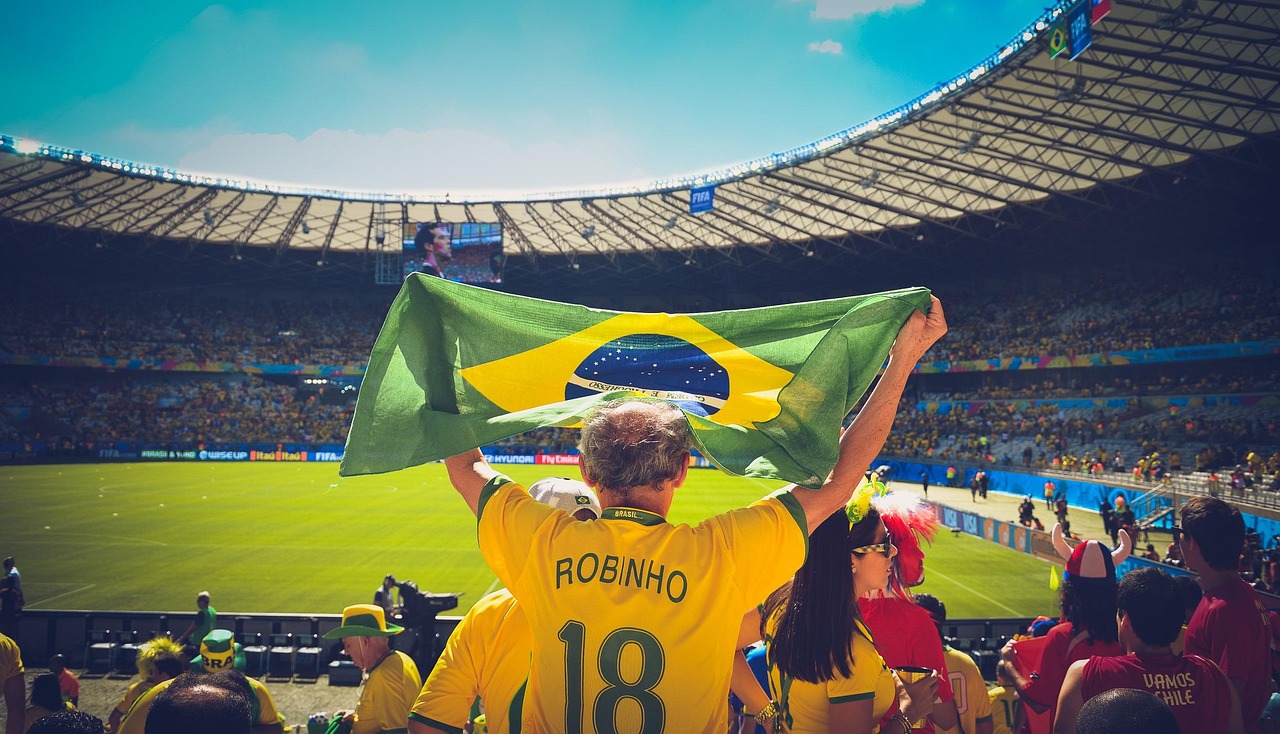
The World Cup creates a festival atmosphere unlike any other sporting event. Fan zones in host cities allow supporters from different nations to celebrate together, breaking down cultural barriers through shared passion for football. These spaces become melting pots of languages, traditions, and celebrations.
National team jerseys become powerful symbols of identity during the tournament. Fans proudly wear their colors in stadiums, public viewing areas, and even in their daily lives, creating a visual tapestry of global football culture. The sight of opposing supporters sharing drinks and stories exemplifies the World Cup’s unifying power.
Traditional songs, chants, and celebrations add unique flavor to each nation’s support. Mexican waves, Icelandic thunderclaps, Brazilian samba, and English anthems create an auditory experience as memorable as the matches themselves. These traditions pass between generations, connecting past and present through shared rituals.
🔮 The Future: 2026 and Beyond
The 2026 World Cup will mark a historic moment as the tournament expands to 48 teams and takes place across three host nations—the United States, Canada, and Mexico. This North American tournament promises unprecedented scale, with 16 cities hosting matches across diverse climates and cultures.
The expanded format will feature 104 matches, providing more nations with World Cup experience while potentially diluting competitive quality in early rounds. FIFA argues that increased participation will accelerate football development globally, particularly in regions with emerging programs.
Future tournaments may feature further innovations. FIFA continues exploring technology enhancements, sustainability initiatives, and formats that maximize fan engagement while preserving the competition’s integrity. The balance between tradition and progress remains central to World Cup evolution.
Sustainability and Legacy Considerations ♻️
Environmental concerns increasingly influence World Cup planning. Qatar’s air-conditioned stadiums, while technologically impressive, raised questions about carbon footprints. Future hosts face pressure to implement sustainable practices, from renewable energy to waste reduction and legacy planning.
Stadium legacy remains crucial. White elephant venues that become financial burdens after tournaments damage host communities. Successful legacy planning ensures facilities serve local populations long after the final whistle, providing spaces for sports, entertainment, and community gatherings.

🏅 The Essence of World Cup Magic
What makes the World Cup uniquely special transcends statistics and economics. The tournament creates shared human experiences—strangers embracing after goals, nations pausing daily routines for matches, children dreaming of future glory while watching their heroes compete.
The World Cup reminds us that football, at its core, is about joy, passion, and connection. Whether supporting traditional powerhouses or emerging nations, fans experience emotions that bind us together regardless of language, religion, or background. These four weeks every four years demonstrate sport’s power to unite humanity.
As technology advances and the tournament evolves, the fundamental magic remains constant—22 players on a pitch, billions watching worldwide, and the possibility that anything can happen. This beautiful unpredictability ensures that each World Cup creates new legends, heartbreak, and moments that will be remembered for generations.
The FIFA World Cup stands as testament to football’s global reach and emotional impact. From Uruguay 1930 to the upcoming 2026 edition, the tournament continues inspiring dreams, creating heroes, and proving that the beautiful game truly belongs to the world.
The journey toward each World Cup, filled with qualification drama and anticipation, rivals the tournament itself in generating passion and excitement among football’s global family. 🌍⚽🏆
