
Anúncios
O rádio continua sendo uma das formas de mídia mais acessíveis e apreciadas em todo o mundo, conectando milhões de ouvintes à música, notícias e entretenimento diariamente.


Seja dirigindo para o trabalho, relaxando em casa ou explorando novos gêneros musicais, a radiodifusão continua a evoluir, mantendo seu apelo atemporal. O meio se transformou drasticamente desde sua criação, mas permanece notavelmente relevante em nossa era digital.
Anúncios
From vintage tabletop models to sophisticated digital receivers, radio technology has advanced significantly while preserving the magic that made it a household staple for over a century. Let’s explore the fascinating world of AM and FM broadcasting, discover the best radio devices available today, and uncover some truly remarkable curiosities about this enduring medium.
📻 Entendendo a transmissão de rádio AM e FM

Before diving into the best radio devices, it’s essential to understand the fundamental differences between AM (Amplitude Modulation) and FM (Frequency Modulation) broadcasting. These two technologies have coexisted for decades, each serving distinct purposes and audiences.
Anúncios
AM radio operates on lower frequencies, typically between 530 and 1700 kHz. This allows AM signals to travel much farther, especially at night when atmospheric conditions improve signal propagation. AM stations are traditionally associated with talk radio, news, sports commentary, and religious programming.
FM radio broadcasts on higher frequencies, ranging from 88 to 108 MHz. FM signals deliver superior sound quality with less interference and static, making them ideal for music broadcasting. However, FM signals don’t travel as far as AM and are more susceptible to physical obstacles like buildings and mountains.
The technical differences between these broadcasting methods create unique listening experiences. While AM might sound more compressed and limited in dynamic range, its reliability and reach make it invaluable for emergency broadcasts and wide-area communication. FM’s crystal-clear audio reproduction has made it the preferred choice for music lovers and audiophiles.
🏆 Os melhores rádios AM/FM portáteis de 2024
Portable radios have evolved significantly from their bulky predecessors. Today’s models combine classic functionality with modern conveniences like Bluetooth connectivity, digital displays, and rechargeable batteries.
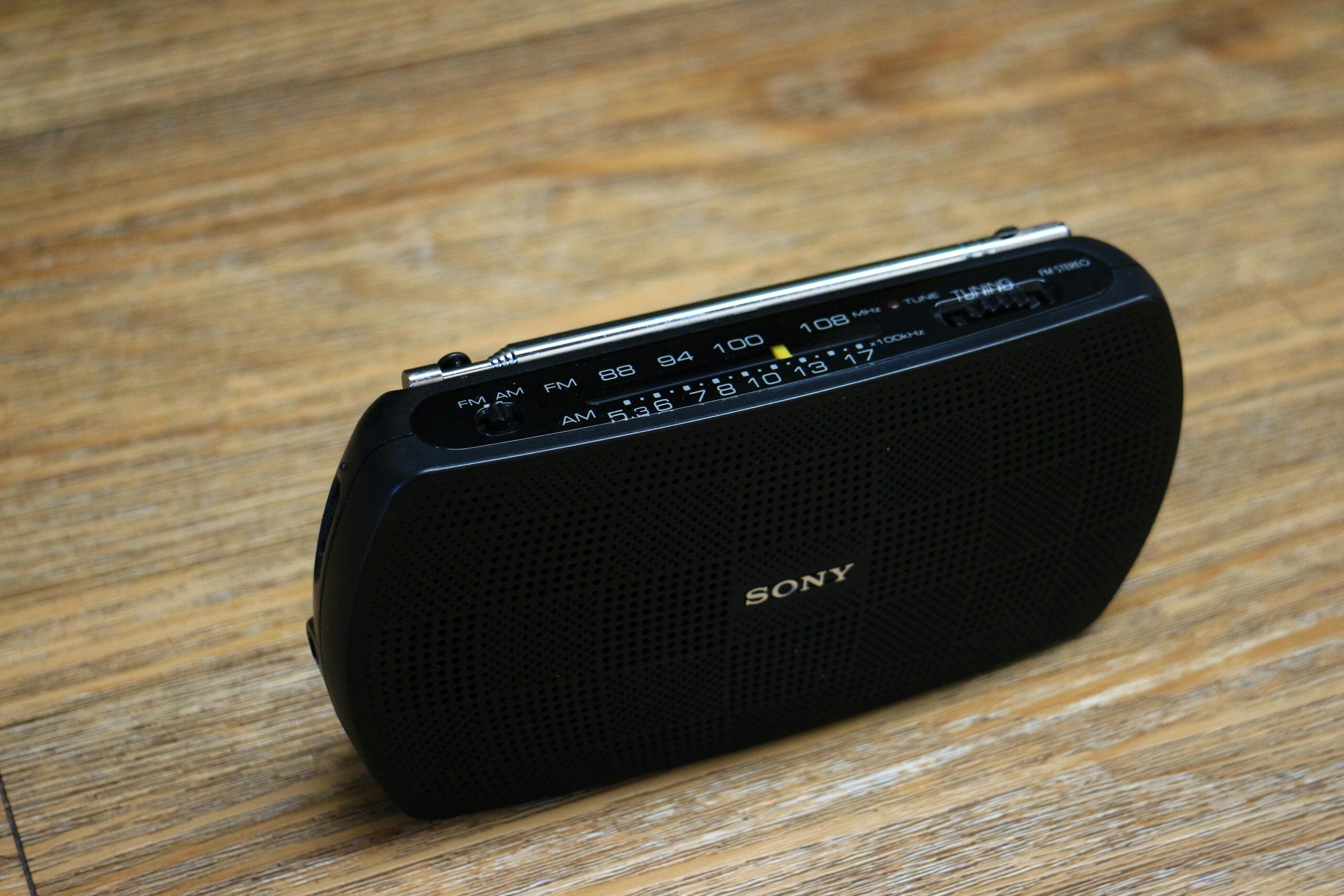
Sony ICF-P26: This compact and affordable radio represents excellent value for basic listening needs. Its lightweight design makes it perfect for outdoor activities, while the LED tuning indicator helps you lock onto stations with precision. The built-in speaker delivers surprisingly robust sound for its size, and the optional headphone jack provides private listening options.
Sangean PR-D18: Recognized as one of the best portable radios for serious listeners, the PR-D18 features exceptional AM reception and outstanding FM clarity. Its large, easy-to-read display and intuitive controls make station selection effortless. The built-in rechargeable battery provides hours of continuous operation, and the rugged construction ensures durability in various environments.
CC Skywave SSB: For radio enthusiasts seeking international broadcasts and shortwave capabilities alongside AM and FM, this device stands out. It includes Air Band reception and single sideband (SSB) functionality, opening up a world of distant stations and aviation communications. The memory presets allow you to save your favorite stations across all bands.
Panasonic RF-2400D: This classic design radio continues to impress with its powerful reception capabilities. The large analog tuning dial provides a tactile, nostalgic experience, while the telescopic antenna ensures optimal signal capture. Its rotating ferrite bar antenna significantly improves AM reception, making weak stations more accessible.
🎵 Sistemas de rádio premium para mesa e uso doméstico
For those who prioritize sound quality and aesthetic appeal in their living spaces, several premium tabletop radios deliver exceptional performance while serving as attractive decor pieces.
Tivoli Audio Model One BT: This iconic design has become synonymous with high-fidelity radio listening. Its handcrafted wooden cabinet houses precision-tuned electronics that extract maximum quality from both AM and FM broadcasts. The addition of Bluetooth connectivity bridges traditional and modern audio sources seamlessly.
Sangean WR-11SE: Combining vintage aesthetics with contemporary functionality, this tabletop radio features genuine walnut veneer cabinetry and a rotary volume control that feels substantial and precise. The dual alarm clocks and sleep timer make it ideal for bedside placement, while the auxiliary input accommodates external audio sources.
Como Audio Solo: This handmade radio from Chicago represents American craftsmanship at its finest. The rich, room-filling sound emerges from carefully selected components housed in solid hardwood cabinets. Beyond AM/FM reception, it offers Wi-Fi streaming, Spotify Connect, and multi-room audio capabilities.
🚗 Melhores Sistemas e Atualizações de Rádio Automotivo
Car radios have transformed from simple AM receivers to sophisticated entertainment hubs. Modern automotive audio systems integrate seamlessly with smartphones while maintaining excellent broadcast reception.
High-quality car radios now feature HD Radio technology, which delivers CD-quality sound over traditional broadcast frequencies. This digital enhancement eliminates static and interference while providing additional data like song titles, artist information, and album art directly on the display.
When selecting a car radio upgrade, consider models from Pioneer, Kenwood, or Alpine that offer both exceptional FM/AM tuners and comprehensive connectivity options. Look for features like high-voltage preamp outputs, customizable equalizers, and robust antenna amplifiers that ensure strong signal reception even in challenging environments.
🌍 Curiosidades Fascinantes sobre Radiodifusão
Radio broadcasting’s rich history contains numerous surprising facts that highlight its cultural significance and technological innovation. These curiosities reveal how profoundly this medium has shaped society.
The Longest Running Radio Program: The Grand Ole Opry has been broadcasting continuously since 1925, making it the longest-running radio program in history. This country music showcase helped establish Nashville as “Music City USA” and launched countless legendary careers.
Radio Waves Travel Forever: When a radio station broadcasts a signal, those waves continue traveling through space indefinitely. Theoretically, early radio broadcasts from the 1920s are still propagating through the universe, currently about 100 light-years from Earth. Any extraterrestrial civilization with appropriate technology could potentially intercept these vintage programs.
The “War of the Worlds” Panic: In 1938, Orson Welles directed a radio adaptation of H.G. Wells’s science fiction novel that was so realistic it caused widespread panic. Many listeners tuned in after the program began and missed the disclaimer, genuinely believing Martians were invading New Jersey. This incident demonstrated radio’s powerful influence on public perception.
AM Radio Saved Lives During 9/11: When the World Trade Center towers collapsed, they destroyed most of New York City’s FM and television transmission equipment located atop the buildings. AM radio stations, with transmitters located elsewhere, continued broadcasting critical emergency information, demonstrating the resilience and importance of AM technology.
Radio Personality as a Career Path: Early radio announcers were expected to remain anonymous, with stations believing that personalities would distract from programming content. This changed in the 1930s when stations realized that charismatic hosts attracted loyal audiences. This shift created the radio personality profession and influenced all subsequent broadcast media.
📡 Inovações técnicas que mudaram o rádio para sempre
Several technological breakthroughs have transformed radio from a simple communication tool into a sophisticated medium. Understanding these innovations helps appreciate modern radio capabilities.
Superheterodyne Receiver: Invented by Edwin Armstrong in 1918, this circuit design revolutionized radio reception by converting incoming signals to a fixed intermediate frequency before amplification and detection. This innovation dramatically improved selectivity and sensitivity, making modern radio receivers possible.
FM Stereo Broadcasting: Also developed by Edwin Armstrong, FM stereo technology became commercially available in 1961. This breakthrough allowed broadcasters to transmit two separate audio channels, creating the immersive soundscape that music lovers cherish. The stereo pilot tone at 19 kHz synchronizes left and right channels, delivering coherent three-dimensional audio.
RDS (Radio Data System): This communication protocol allows FM stations to transmit additional digital information alongside audio programming. RDS provides station identification, program information, traffic alerts, and alternative frequencies, significantly enhancing the listening experience without requiring internet connectivity.
HD Radio Technology: Introduced in the early 2000s, HD Radio transmits digital audio within existing AM and FM frequency bands. This hybrid analog-digital system delivers superior sound quality while maintaining backward compatibility with conventional receivers. HD Radio also enables multicasting, allowing stations to broadcast multiple program streams simultaneously on a single frequency.
🎙️ Por que o rádio continua relevante na era digital
Despite competition from streaming services and podcasts, traditional radio broadcasting maintains significant advantages that ensure its continued relevance. Understanding these strengths explains radio’s enduring popularity.
Radio provides immediate local information during emergencies when internet connectivity fails. Natural disasters, power outages, and infrastructure failures that disable cellular networks leave radio as the most reliable communication medium. Battery-powered or hand-crank radios can receive broadcasts without any external infrastructure, making them essential emergency preparedness tools.
The lean-back listening experience that radio offers contrasts sharply with the active engagement required by streaming platforms. Radio listeners don’t need to search, select, or curate content—they simply tune in and discover. This effortless experience remains appealing to audiences seeking background entertainment during commutes, work, or household activities.
Local radio stations create community connections that national streaming services cannot replicate. Community event announcements, local news coverage, high school sports broadcasts, and hometown personalities foster a sense of belonging that strengthens social bonds. Small-town radio stations often serve as community bulletin boards and emergency communication hubs.
Radio also serves as a discovery platform for new music and emerging artists. Many listeners report discovering their favorite songs and artists through radio airplay rather than algorithmic recommendations. The human curation provided by experienced radio programmers and DJs offers a listening experience that algorithms struggle to duplicate.
🔧 Otimizando a recepção do seu rádio
Even the best radio requires proper setup and positioning to deliver optimal performance. These practical tips can dramatically improve your listening experience across all frequencies.
For FM reception, antenna positioning proves critical. Fully extend telescopic antennas and orient them vertically for best results. If your radio includes a rotating antenna, experiment with different angles while tuned to weak stations. Indoor FM antennas should be placed near windows and away from electronic devices that generate interference.
AM reception depends heavily on the built-in ferrite bar antenna found in most portable and tabletop radios. These directional antennas work best when the entire radio is rotated rather than just an external antenna. Position your radio perpendicular to the direction of the desired station for strongest signal capture.
External antennas significantly enhance both AM and FM reception, especially in challenging environments. For FM, simple dipole antennas or sophisticated outdoor directional arrays can capture distant stations. AM loop antennas, whether passive or amplified, dramatically improve selectivity and signal strength, particularly helpful in areas with many competing stations.
Interference reduction often makes the difference between frustrating static and clear reception. Switch-mode power supplies, LED lights, computers, and electronic devices generate radio frequency interference. Creating physical distance between your radio and these sources, or turning them off during listening sessions, can reveal stations previously obscured by noise.
🌟 Colecionar rádios antigos como hobby
Vintage radio collecting has developed into a passionate hobby combining history, technology, and craftsmanship. These beautiful devices represent remarkable engineering achievements while serving as functional art pieces.
Tube radios from the 1930s through 1960s exemplify the golden age of radio design. Their warm sound characteristics, created by vacuum tube amplification, appeal to audiophiles who appreciate analog technology. Restored vintage radios can function perfectly after 70+ years, testament to their robust construction and serviceable design.
Cathedral and tombstone-style radios from the 1930s represent Art Deco design at its finest. These wooden cabinets feature intricate veneer work, decorative grilles, and substantial presence that commands attention in any room. Collectors prize well-preserved examples, though skilled restoration can return even deteriorated radios to showroom condition.
Transistor radios revolutionized portable listening after their introduction in the 1950s. Japanese manufacturers like Sony pioneered miniaturization, creating pocket-sized radios that defined teenage culture throughout the 1960s. Colorful plastic cases, chrome accents, and compact designs make these radios highly collectible and affordable for beginning enthusiasts.
📚 Recursos de aprendizagem para entusiastas do rádio
Whether you’re interested in radio technology, broadcasting history, or DXing (distance listening), numerous resources support your journey into this fascinating hobby.
Online communities like RadioReference.com and various amateur radio forums provide spaces where enthusiasts share reception reports, technical advice, and station information. These communities welcome newcomers and offer invaluable knowledge accumulated over decades of collective experience.
Books such as “On the Short Waves, 1923-1945” by Jerome S. Berg and “Hello Everybody!: The Dawn of American Radio” by Anthony Rudel provide historical context that enriches understanding of radio’s cultural impact. Technical manuals and service documentation help collectors restore and maintain vintage equipment.
DX clubs focused on distance listening publish bulletins featuring propagation predictions, station schedules, and loggings from members worldwide. Organizations like the National Radio Club (NRC) for AM DXing and FM DX Association support specialized interests within the broader radio hobby.
🎯 Como escolher o rádio certo para as suas necessidades
Selecting an appropriate radio depends on your specific requirements, listening preferences, and budget. Consider these factors when making your decision.
Casual listeners who primarily want background music and local stations can find excellent options in basic portable or clock radios. Prioritize ease of use, sound quality appropriate to your space, and convenience features like presets and alarms.
Serious music enthusiasts should invest in higher-quality receivers with superior speakers or audio outputs for external amplification. Look for wide frequency response, low distortion specifications, and features like stereo separation that preserve recording quality.
DX enthusiasts and radio hobbyists require receivers with enhanced sensitivity, selectivity, and stability. Features like digital tuning displays, multiple bandwidth filters, and external antenna connections become essential for pursuing distant stations and weak signal work.
Emergency preparedness demands rugged, reliable radios with alternative power options. Hand-crank dynamos, solar panels, and standard battery compatibility ensure operation when conventional power sources fail. NOAA weather band reception provides critical emergency alerts.
🌅 O Futuro da Radiodifusão AM e FM
While digital media continues expanding, traditional radio broadcasting adapts and evolves. Hybrid technologies combining broadcast and internet delivery create new possibilities while preserving radio’s core strengths.
HD Radio adoption continues growing in major markets, with hundreds of stations now broadcasting digital signals. This technology preserves spectrum efficiency while delivering quality improvements that help radio compete with streaming services. Additional channels create opportunities for niche programming without requiring new frequency allocations.
Smart speaker integration brings radio stations into voice-controlled home ecosystems. Commands like “play the local news station” connect listeners to traditional broadcasts through internet streams, introducing radio to younger audiences accustomed to on-demand content.
Electric vehicles present challenges and opportunities for AM radio. While some manufacturers have eliminated AM receivers due to electromagnetic interference from electric motors, others recognize AM’s emergency broadcast importance and engineer solutions to maintain compatibility. This situation highlights AM radio’s continued relevance for public safety communications.
Radio broadcasting’s century-long success demonstrates remarkable resilience and adaptability. As technology advances, the fundamental appeal of radio—immediate, local, and effortlessly accessible audio content—remains compelling. Whether through traditional receivers or modern digital platforms, radio continues connecting communities, entertaining audiences, and providing essential information to millions of loyal listeners worldwide.
The enduring popularity of AM and FM radio, combined with continuous technological improvements, ensures this beloved medium will remain an integral part of our media landscape for generations to come. Whether you’re rediscovering radio through a vintage restoration project or exploring its capabilities with a modern HD receiver, you’re participating in a rich tradition that has shaped culture, connected communities, and entertained audiences for over a hundred years. 📻✨
