
Anúncios
Chess has evolved from royal courts to digital screens, offering players worldwide the opportunity to sharpen their minds anytime, anywhere.


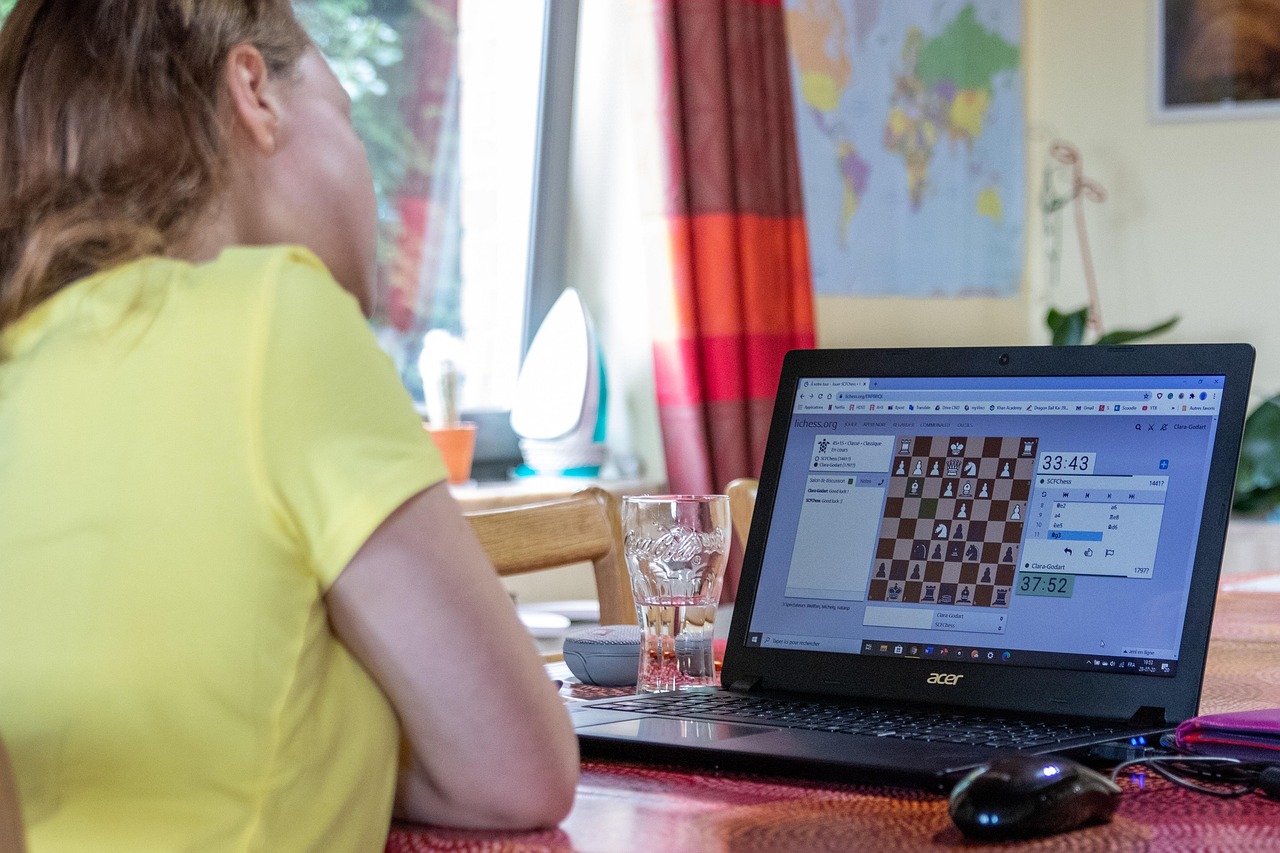
The digital revolution has transformed how we approach this ancient game. What once required physical boards, opponents in the same room, and scheduled club meetings now fits comfortably in our pockets. Online chess platforms have democratized access to the game, creating vibrant communities where beginners and grandmasters coexist.
Anúncios
Whether you’re looking to improve your strategic thinking, compete globally, or simply enjoy a mentally stimulating hobby, online chess offers unique advantages that traditional over-the-board play cannot match. Let’s explore why millions of players worldwide have embraced this digital evolution of the timeless game.
🌍 Global Access to Opponents at Any Skill Level

One of the most compelling advantages of online chess is the instant access to opponents from every corner of the world. No longer are players limited by geographical boundaries or local club schedules. At any hour of the day or night, thousands of players are ready to compete.
Anúncios
This global connectivity means you can play against someone in Tokyo during your morning coffee break, challenge a player from Buenos Aires during lunch, and finish the evening with a match against an opponent in Stockholm. The diversity of playing styles, cultural approaches to the game, and strategic preferences enriches your chess education exponentially.
Online platforms use sophisticated matchmaking algorithms that pair you with opponents of similar skill levels. This ensures competitive balance and prevents discouraging mismatches that can occur in casual over-the-board settings. As you improve, the system adapts, continuously presenting appropriate challenges that facilitate growth without overwhelming frustration.
⏰ Flexibility and Convenience That Fits Modern Lifestyles
Traditional chess requires coordination, travel, and dedicated time blocks. Online chess eliminates these barriers entirely. You can engage with the game during brief moments throughout your day—waiting for an appointment, during your commute on public transportation, or while relaxing at home.
The format flexibility is particularly valuable. If you have only five minutes, you can play a blitz game. With more time available, you can engage in longer time controls that allow deeper strategic thinking. Correspondence chess options let you make moves at your own pace over days or weeks, perfect for busy professionals who love the game but cannot commit to continuous play sessions.
This convenience doesn’t diminish the quality of play. Many online platforms offer tournament structures, rated games, and serious competitive environments that rival traditional chess clubs. You gain all the benefits of structured competition without the logistical challenges.
📚 Integrated Learning Tools and Immediate Improvement
Online chess platforms typically include robust educational features that accelerate skill development. Integrated puzzle trainers, tactical exercises, and endgame studies provide targeted practice for specific weaknesses in your game. These tools offer immediate feedback, helping you understand mistakes and reinforce correct patterns.
Computer analysis has revolutionized chess improvement. After completing a game, sophisticated engines can review every move, identifying mistakes, suggesting better alternatives, and explaining the reasoning behind optimal choices. This instant, personalized feedback would have been impossible for most players in the pre-digital era.
Many platforms offer structured lessons from titled players, video libraries covering opening theory, middlegame strategy, and endgame technique. This educational content transforms your playing platform into a comprehensive chess academy, accessible without expensive private coaching or formal instruction.
💰 Cost-Effective Access to Premium Chess Experiences
Traditional chess participation can involve significant expenses. Quality chess sets, club memberships, tournament entry fees, travel costs, and coaching sessions add up quickly. Online chess dramatically reduces these financial barriers.
Most online chess platforms offer substantial free features that provide complete playing experiences. You can play unlimited rated games, access basic training tools, and participate in community forums without spending anything. Premium memberships, when desired, typically cost less than a single month of traditional club dues while offering vastly more features.
The elimination of physical requirements means you don’t need expensive equipment. A smartphone, tablet, or computer with internet access is sufficient. This accessibility has introduced chess to populations who might never have engaged with the game due to economic constraints or lack of local chess infrastructure.
🧠 Cognitive Benefits With Enhanced Tracking and Measurement
Chess has long been recognized for its cognitive benefits—improving concentration, pattern recognition, strategic thinking, and decision-making skills. Online chess amplifies these benefits through systematic tracking and measurable progress.
Detailed statistics reveal your strengths and weaknesses across different aspects of the game. You can see precisely where you lose pieces, which openings yield the best results, and what time controls suit your thinking style. This data-driven approach to improvement accelerates cognitive development in ways that casual over-the-board play cannot.
The mental stimulation remains constant and adaptable. Unlike many digital entertainment options that become repetitive, chess offers infinite complexity. Each game presents unique challenges that require creative problem-solving, maintaining brain engagement and promoting neuroplasticity throughout life.
👥 Building Communities and Social Connections Globally
Far from being a solitary activity, online chess facilitates rich social experiences. Virtual chess clubs bring together enthusiasts with shared interests, creating communities based on playing style, skill level, geographical location, or thematic interests.
Chat features, forums, and post-game analysis sessions enable meaningful interactions with players worldwide. These connections often transcend the game itself, leading to friendships, cultural exchanges, and networking opportunities that wouldn’t exist in geographically limited traditional clubs.
Streaming platforms have created a spectator dimension to online chess, with popular players broadcasting their games and thought processes. This entertainment aspect has attracted new audiences to the game, creating vibrant communities around personalities and playing styles. Viewers can interact directly with players, ask questions, and learn from experienced competitors in real-time.
⚡ Different Time Controls for Varied Mental Engagement
Online platforms offer unprecedented variety in game formats, each providing distinct cognitive challenges and entertainment value. Bullet chess (games under three minutes total) demands intuition, pattern recognition, and rapid decision-making. These fast-paced games train your brain to process information quickly under pressure.
Blitz games (three to ten minutes) balance speed with strategic depth, allowing tactical combinations while maintaining time pressure. Rapid chess (ten to thirty minutes) permits more thorough calculation and planning. Classical time controls (thirty minutes and beyond) enable deep strategic thinking comparable to over-the-board tournament play.
This variety means you can choose the mental engagement level appropriate for your current state. Tired after work? Play relaxing rapid games. Seeking intense cognitive workout? Tackle complex classical positions. Want quick entertainment? Bullet chess provides instant gratification. This adaptability maximizes both enjoyment and cognitive benefits.
📊 Transparent Rating Systems and Measurable Progress
Online chess implements standardized rating systems that provide objective measurement of skill level. Unlike casual play where assessment remains subjective, these ratings offer clear benchmarks for improvement and realistic goal-setting.
Watching your rating climb provides tangible evidence of development, creating motivational feedback loops that encourage continued practice. The system’s transparency shows exactly how many points you gained or lost, which games impacted your rating most significantly, and how you compare to the global player population.
Separate ratings for different time controls acknowledge that skills vary across formats. You might excel at tactical bullet games while developing positional understanding in classical play. This nuanced assessment helps identify specific areas for focused improvement.
🎯 Specialized Training Modes Beyond Standard Games
Online platforms offer training modes impossible in traditional settings. Puzzle rush challenges you to solve as many tactical positions as possible within time constraints, sharpening pattern recognition and calculation speed. Survival modes increase difficulty progressively, building confidence and competence systematically.
Opening trainers drill specific variations through repetitive practice, embedding theoretical knowledge into intuitive understanding. Endgame simulators present practical positions from specific material configurations, teaching crucial technical skills that decide close games.
Bot opponents with adjustable difficulty levels provide practice partners who never tire, judge, or become unavailable. These computer players can simulate specific playing styles, allowing targeted preparation against aggressive attackers, solid defenders, or positional grinders. This variety prepares you for the diverse opposition you’ll encounter in human competition.
🏆 Tournament Opportunities and Competitive Recognition
Online chess democratizes competitive opportunities. Daily tournaments across all skill levels mean anyone can experience organized competition without qualification barriers or entry fees. From beginner-friendly events to titled-player championships, the tournament ecosystem accommodates every ambition level.
These competitions provide structure and purpose to improvement efforts. Working toward tournament performance goals creates motivation beyond casual play. The recognition systems—badges, titles, leaderboards—offer psychological rewards that reinforce engagement and celebrate achievements.
For serious players, online tournaments now offer substantial prizes, norm opportunities, and pathways to official titles. The line between “online” and “serious” chess has blurred considerably, with major federations recognizing digital competition as legitimate and significant. This validation elevates online play from casual hobby to credible competitive pursuit.
🔄 Game Archives and Unlimited Review Opportunities
Every online game is automatically saved, creating a personal database of your chess history. This archive becomes an invaluable learning resource, allowing you to review games days, weeks, or years later with fresh perspective and improved understanding.
Unlike over-the-board games where positions may be misremembered or lost to time, online archives preserve exact move sequences, time management, and position evaluations. You can track how your approach to specific openings has evolved, identify recurring mistakes that persist despite conscious efforts to correct them, and celebrate the moments when preparation paid off perfectly.
This historical data enables longitudinal analysis of your chess development. Comparing games from different periods reveals how your thinking has matured, which aspects of your game have improved most, and where stubborn weaknesses require additional focus. Such comprehensive self-assessment would be practically impossible with traditional record-keeping.
🌟 Accessibility Features for Diverse Player Needs
Online chess platforms increasingly incorporate accessibility features that make the game available to players with various physical and cognitive needs. Visual customization allows adjustment of board colors, piece styles, and interface elements to accommodate color blindness or visual impairments.
Move assistance features can highlight legal moves, suggest candidate considerations, or provide warnings before potentially disastrous blunders. While purists might dismiss these aids, they enable players who might otherwise struggle with the game to participate meaningfully and enjoyably.
Audio descriptions, compatibility with screen readers, and alternative input methods expand participation to players with disabilities. This inclusive approach ensures that chess remains truly universal, fulfilling its potential as a mental activity accessible regardless of physical circumstances.
🚀 Continuous Innovation and Feature Development
Unlike static physical chess sets, online platforms continuously evolve with new features, improved interfaces, and innovative training tools. Development teams regularly add functionality based on user feedback, competitive trends, and technological capabilities.
Machine learning integration provides increasingly sophisticated analysis, personalized training recommendations, and adaptive difficulty adjustments. Virtual reality implementations are beginning to blend the tactile satisfaction of physical pieces with digital convenience and features.
This ongoing innovation means the online chess experience improves over time rather than becoming stale. Features impossible to imagine a few years ago become standard, and tomorrow’s developments promise even more engaging and educational experiences. Players benefit from this continuous improvement without additional investment.
♟️ Bridging the Gap Between Casual Fun and Serious Study
Online chess uniquely accommodates both casual entertainment and serious competitive preparation within the same platform. You can play lighthearted games with friends using custom rules or time controls, then immediately switch to rated games that count toward your official standing.
This flexibility eliminates the traditional divide between “fun” and “serious” chess. The same application that provides relaxing entertainment during leisure moments can facilitate deep opening preparation before important tournaments. You control the engagement level according to your current goals and mood.
For families, online platforms offer safe spaces where players of dramatically different skill levels can enjoy games together through handicap features, teaching modes, or collaborative puzzle-solving. Parents can introduce children to chess, monitor their progress, and share the learning journey in ways that physical chess clubs might not accommodate as gracefully.
🎓 Professional Development and Cognitive Transferable Skills
The skills developed through online chess extend far beyond the sixty-four squares. Strategic planning, risk assessment, pattern recognition, and decision-making under pressure translate directly to professional environments. Many executives, entrepreneurs, and leaders cite chess as foundational to their strategic thinking capabilities.
The measurable improvement process teaches valuable lessons about deliberate practice, objective self-assessment, and long-term goal pursuit. These metacognitive skills—learning how to learn, identifying weaknesses honestly, and implementing systematic improvement strategies—apply across all domains of personal and professional development.
For students, chess provides academic benefits including improved mathematical reasoning, enhanced reading comprehension through pattern recognition, and better test performance through training in focused concentration. Online accessibility means these benefits can be realized without disrupting busy schedules or requiring transportation to physical locations.
💪 Mental Resilience and Emotional Intelligence Development
Chess teaches resilience through inevitable losses and recovered positions. Online play amplifies this learning by providing immediate opportunities to bounce back from defeats. Rather than dwelling on a loss for days until the next club meeting, you can immediately enter another game, applying lessons learned and rebuilding confidence.
The game develops emotional regulation as you manage frustration from mistakes, pressure from time constraints, and the psychological warfare inherent in competitive situations. These experiences, repeated across thousands of games, cultivate emotional intelligence and composure that benefit all life areas.
Anonymous online play can actually enhance this learning by removing social pressure and ego threats. When opponents don’t know your identity, age, or background, you can focus purely on chess quality without self-consciousness. This psychological freedom enables risk-taking, creative experimentation, and authentic engagement with the game.
The transformation of chess from an exclusive game played in smoke-filled clubs to an accessible digital activity has preserved the essence of this ancient strategic battle while expanding its reach exponentially. Online platforms have not diminished chess but rather fulfilled its potential as a universal language of logic, creativity, and competition.
Whether you’re a complete beginner taking your first steps into the chess world, an intermediate player seeking consistent improvement, or an experienced competitor pursuing mastery, online chess offers unparalleled advantages.
The future of chess is undoubtedly digital, not as a replacement for over-the-board play but as a powerful complement that has introduced millions to the game’s beauty and complexity. The barriers that once limited participation have fallen, and in their place stands a vibrant, accessible, continuously evolving ecosystem where ancient strategic wisdom meets modern technological convenience. ♟️✨
