
Anúncios
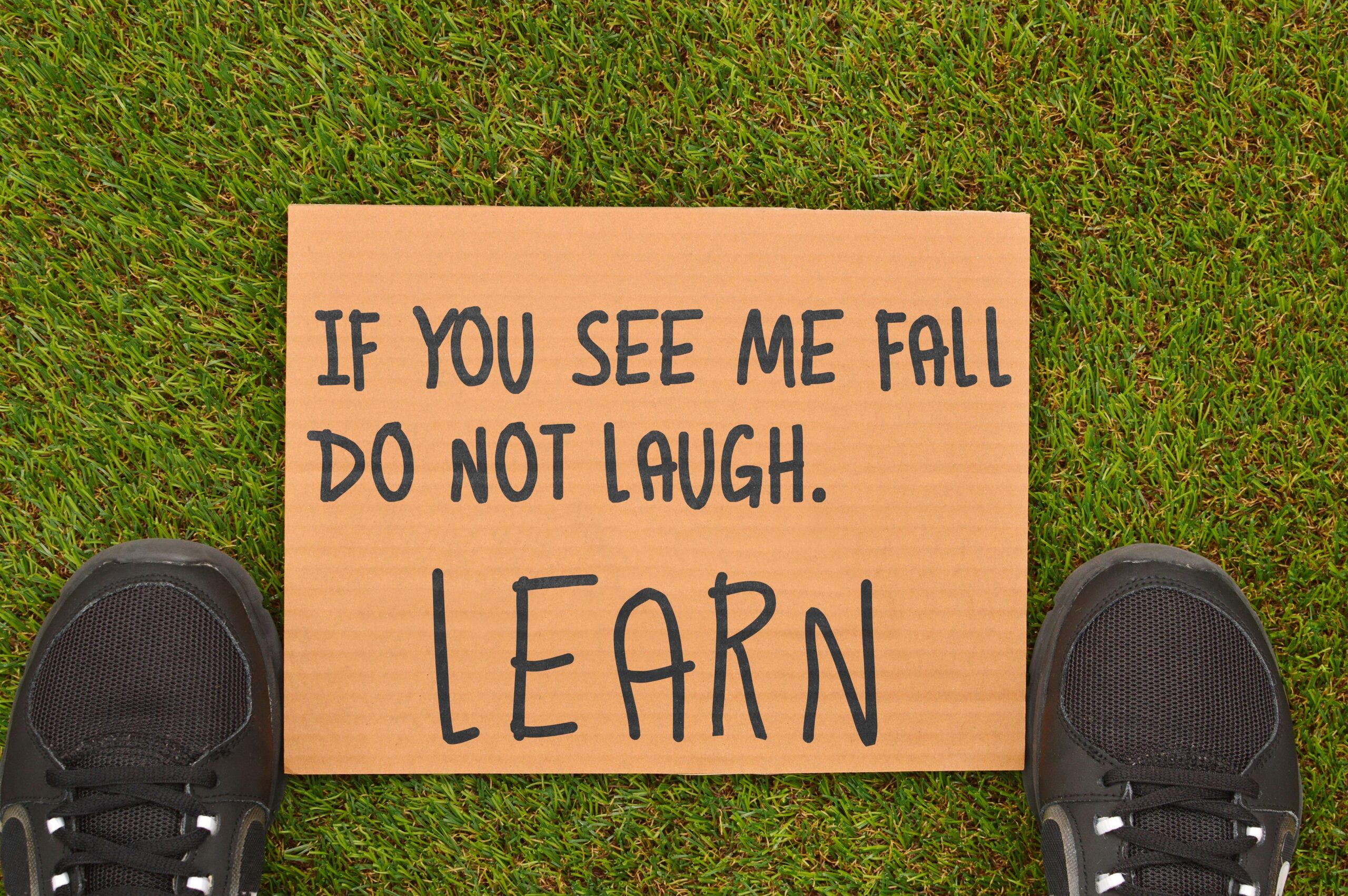
We’ve been sold a compelling narrative: fail fast, fail often, and celebrate every stumble as a badge of honor. But what if this popular entrepreneurial mantra is missing something crucial?
🎭 The Seductive Promise of Painless Failure
Silicon Valley has weaponized failure. Startup conferences overflow with speakers who romanticize their spectacular crashes, transforming bankruptcy into biography material. LinkedIn feeds burst with humble-bragging posts about “my greatest failure that made me who I am today.” The message echoes through business schools, podcasts, and motivational Instagram carousels: failure is just another word for learning.
Anúncios
This narrative contains truth, certainly. Real growth often emerges from setbacks. Innovation requires experimentation, and experimentation invites mistakes. But somewhere between acknowledging failure’s educational value and glorifying it as an end in itself, we’ve constructed a dangerous myth: that failure comes without real consequences, that lessons learned always justify losses incurred, and that every stumble forwards our journey toward success.
The reality tells a different story. Behind every celebrated comeback narrative lie dozens of untold stories—entrepreneurs who never recovered, families fractured by financial stress, mental health casualties of repeated “learning experiences,” and opportunities lost that never returned.
Anúncios
💰 The Hidden Balance Sheet of Failure
When thought leaders preach “fail fast,” they rarely discuss who pays the tuition for these expensive lessons. Financial consequences represent just the visible tip of the iceberg. A failed business venture doesn’t merely close its doors—it leaves a wake of unpaid suppliers, disappointed investors, and laid-off employees whose mortgages don’t pause for entrepreneurial education.
Consider the restaurant owner who took the leap, invested savings, secured loans against their home, and closed within eighteen months. Yes, they learned about cash flow management, location importance, and menu pricing. But they also learned about bankruptcy proceedings, damaged credit scores, and explaining to their children why they’re moving to a smaller apartment. These lessons cost more than money—they cost stability, relationships, and sometimes health.
The psychological toll of failure doesn’t fit neatly into motivational frameworks. Research from the American Psychological Association indicates that financial stress from business failure correlates strongly with anxiety disorders, depression, and even increased risk of substance abuse. When we strip away the inspirational veneer, failure often looks less like a stepping stone and more like a stumbling block that some people never fully recover from.
The Survivorship Bias Problem 📊
We hear from the entrepreneurs who failed upward, never from those who failed out. This survivorship bias distorts our understanding of failure’s true costs. For every Jeff Bezos who survived the dot-com crash to build Amazon, thousands of entrepreneurs experienced similar failures but lacked the capital, connections, or circumstances to try again.
The podcasts don’t interview the graphic designer who returned to corporate employment after their agency folded, taking a lower salary than before they left because of the resume gap. We don’t hear TED talks from the real estate investor who lost everything in 2008 and spent a decade rebuilding basic financial stability. Their lessons were equally valid, but their outcomes don’t serve the narrative that failure is merely a detour on the highway to success.
🧠 When “Learning Experiences” Become Learning Disabilities
The growth mindset movement, popularized by psychologist Carol Dweck, emphasizes viewing challenges as opportunities for development. This framework offers genuine value when applied appropriately. However, the corporate and entrepreneurial worlds have twisted this concept into a justification for preventable mistakes and poor planning.
Not all failures deliver proportional lessons. Failing because you didn’t research your market isn’t a noble learning experience—it’s negligence. Failing because you ignored warning signs from mentors isn’t growth—it’s arrogance. Failing because you prioritized speed over foundational planning isn’t iteration—it’s recklessness.
True wisdom involves distinguishing between intelligent risks with asymmetric upside and foolish gambles dressed in entrepreneurial language. The former involves calculated experimentation with managed downside; the latter involves wishful thinking with catastrophic potential consequences.
The Myth of Transferable Lessons 🔄
Another problematic assumption: lessons from failure automatically translate into future success. This belief ignores how context-dependent most business lessons are. Understanding why your SaaS startup failed doesn’t necessarily help you succeed in e-commerce. Learning from a failed restaurant doesn’t directly apply to launching a consulting practice.
Moreover, failure can teach the wrong lessons. A founder who fails due to poor market timing might conclude they’re bad at business when they’re actually just unlucky. An entrepreneur who succeeds after multiple failures might attribute their success to perseverance when luck or external factors played larger roles. We’re pattern-seeking creatures prone to drawing causal connections where none exist.
⚖️ The Privilege Hiding in Plain Sight
The “fail fast” philosophy often functions as luxury goods—accessible primarily to those who can afford it. When Mark Zuckerberg drops out of Harvard to pursue Facebook, he’s not burning bridges; Harvard explicitly allows students to return. When a venture capitalist encourages risk-taking, they’re diversified across dozens of investments where individual failures barely register.
Compare this to the single mother contemplating leaving stable employment to start a business. Her risk calculation looks fundamentally different. She can’t afford to “learn” from failure if learning means losing health insurance for her children or missing rent. The opportunity to fail and try again isn’t distributed equally—it correlates strongly with existing wealth, family support systems, education, and social networks.
This privilege blindness pervades entrepreneurial culture. Successful founders who failed multiple times before their breakthrough often downplay or forget the safety nets that allowed repeated attempts—family financial support, debt-free education, industry connections, or previous high-income employment that built savings cushions.
The Geography of Second Chances 🌍
Cultural and geographic factors dramatically influence failure’s consequences. In the United States, bankruptcy laws eventually allow fresh starts. In some countries, business debt follows individuals indefinitely. In cultures where saving face carries enormous weight, entrepreneurial failure brings social stigma that extends to entire families. The Silicon Valley approach to failure doesn’t export well to contexts where safety nets don’t exist and failure means destitution rather than pivot opportunities.
📉 Real-World Consequences They Don’t Mention in TED Talks
Beyond financial and psychological costs, failure generates cascading consequences that disrupt lives for years. Relationships suffer extraordinary strain when businesses fail. Research from the University of Denver found that financial stress ranks among the top predictors of divorce, and entrepreneurial ventures generate particular friction due to their all-consuming nature and unpredictable income.
Partners who supported startup dreams often bear silent costs—deferred career advancement, moved cities, delayed family planning, or depleted joint savings. When the venture fails, resentment festers even when the relationship survives. These emotional costs don’t depreciate or amortize—they compound with interest.
Career trajectories suffer too. While some employers value entrepreneurial experience, others view failed ventures as red flags indicating inability to commit, poor judgment, or instability. Age compounds this effect; a 25-year-old who spent two years on a failed startup faces different market perceptions than a 45-year-old with the same gap. The latter often confronts ageism amplified by questions about why they’re returning to traditional employment.
The Health Ledger Rarely Balanced ⚕️
Entrepreneurial stress manifests physically. The chronic cortisol elevation from financial uncertainty, the sleep deprivation from working multiple jobs while building a business, the poor nutrition from prioritizing work over self-care—these behaviors extract long-term health consequences that persist after the business closes.
Studies link chronic stress to cardiovascular disease, weakened immune systems, accelerated aging, and metabolic disorders. That failed venture might teach valuable business lessons, but it might also teach your body to develop hypertension or anxiety disorders that require years of treatment. These health costs never appear in failure retrospectives or pivot announcements.
🎯 Toward a More Honest Failure Framework
Acknowledging failure’s real costs doesn’t mean avoiding all risks or returning to corporate conformity. It means approaching risk with eyes open, understanding what you’re actually wagering, and making informed decisions rather than following motivational slogans.
Intelligent risk-taking involves several principles often absent from “fail fast” cheerleading. First, understand your personal risk tolerance and capacity honestly. Risk tolerance is psychological—how much uncertainty you can handle emotionally. Risk capacity is practical—how much loss you can absorb financially and personally without catastrophic consequences. These aren’t the same thing, and confusing them causes preventable disasters.
Second, minimize unnecessary risks. Many entrepreneurial failures stem from not doing basic homework—market research, competitive analysis, financial modeling, or legal compliance. These aren’t creativity killers; they’re failure preventatives. The goal isn’t moving fast and breaking things—it’s moving smartly and building things.
Strategic Failure vs. Careless Mistakes 🛡️
Not all failures deserve equal treatment. Strategic failures result from intelligent experimentation where you’ve managed downside risk, gathered data, and positioned yourself to recover. You test a new product feature that doesn’t resonate—that’s strategic failure. You launch a business without researching whether anyone wants your product—that’s careless mistakes wrapped in entrepreneurial language.
Strategic failure involves:
- Clear hypotheses you’re testing
- Defined metrics for success and failure
- Predetermined kill criteria that prevent sunk cost fallacy
- Ringfenced resources that protect core stability
- Transparent communication with stakeholders
- Genuine learning extraction through structured reflection
This approach treats failure as a possible outcome of experimentation, not as an end goal or badge of honor. The objective remains success; failure simply becomes an acceptable cost of pursuing it intelligently rather than something to be avoided at all costs or celebrated indiscriminately.
🔍 What Actually Drives Growth
If failure isn’t the reliable teacher we’ve been told, what actually drives genuine growth? The answer combines elements often missing from viral failure narratives: deliberate practice, mentorship, incremental improvement, and yes, occasional setbacks—but managed ones.
Deliberate practice involves structured skill development with immediate feedback. A founder who fails learns chaotically; a founder who seeks mentorship, studies their market, tests assumptions systematically, and iterates based on data learns strategically. The latter approach might involve small failures, but each one serves a specific learning objective rather than hoping lessons emerge from wreckage.
Research from Anders Ericsson on expert performance reveals that top performers in any field rarely credit catastrophic failures for their success. Instead, they describe thousands of hours of focused practice, specific coaching on weaknesses, and incremental progression. The violinist doesn’t learn by playing concerts terribly; they learn through scales, études, and measured performance opportunities.
The Power of Vicarious Learning 📚
You don’t need to personally experience every failure to extract its lessons. Studying others’ mistakes, reading case studies, seeking mentorship from those who’ve navigated similar challenges—these approaches provide learning without the full cost of personal failure. Yet entrepreneurial culture often dismisses such preparation as overthinking or analysis paralysis.
The most successful entrepreneurs typically aren’t serial failures—they’re serial learners who occasionally fail despite their preparation. The distinction matters. They’ve studied their industries thoroughly, networked extensively, sought advisors proactively, and mitigated foreseeable risks before launching. When they do fail, it’s usually due to factors beyond reasonable prediction rather than preventable mistakes.
💡 Reframing Success and Failure
Perhaps the real myth isn’t that failure teaches lessons—it’s that success and failure exist as binary opposites. Reality offers more nuance. Ventures partially succeed, achieving some goals while missing others. Projects deliver learning and growth even while meeting their objectives. Success often contains failures in specific dimensions; failure often includes successful elements worth preserving.
Rather than asking “did this succeed or fail,” more useful questions emerge: What worked? What didn’t? What would I repeat? What would I change? Who benefited? Who was harmed? What did this cost in money, time, relationships, and health? Were those costs justified by the outcomes and lessons? What alternatives might have achieved similar or better results with lower costs?
This reframing removes failure from its pedestal while acknowledging its role. Setbacks become data points rather than badges or shame markers. The focus shifts from failure itself to what you do with the experience—how you extract genuine insight, protect your wellbeing, honor commitments to stakeholders, and make more informed decisions forward.
🌟 The Path Forward: Risk with Respect
Moving beyond the myth of risk-free failure requires cultural shifts. We need entrepreneurial role models who discuss not just their comebacks but their ongoing struggles, their privilege, their doubts, and the people who paid costs for their education. We need investors who value sustainable growth over reckless speed. We need education systems that teach risk assessment alongside risk-taking.
Individually, this means approaching entrepreneurial ventures and career risks with appropriate seriousness. Dream big but plan carefully. Move quickly but not carelessly. Learn from failure but don’t seek it out. Build safety nets before taking leaps. Measure twice and cut once. These aren’t sexy motivational slogans, but they’re honest ones.
Failure isn’t your friend or enemy—it’s a possible outcome of pursuing ambitious goals. Treat it with respect rather than romance. Acknowledge its real consequences while extracting its legitimate lessons. Most importantly, remember that while failure may be inevitable in ambitious pursuits, how you approach risk, prepare for contingencies, and respond to setbacks determines whether failure becomes a tuition payment for future success or simply a cost you couldn’t afford to pay.
The truth about failure isn’t that it doesn’t teach lessons or contribute to growth. It’s that those lessons come at real costs that aren’t equally distributed, don’t always justify themselves, and sometimes teach the wrong things entirely. Success doesn’t require maximizing your failure count—it requires maximizing your learning rate while minimizing unnecessary costs. That’s less catchy than “fail fast,” but it’s considerably more honest about what actually works in the real world where consequences matter and second chances aren’t guaranteed.
